The Complete History of Cannabis – A Global Timeline: Part 6
Part of the Cannabis Education Series. This article explores the period in which scientific research began to reshape the understanding of cannabis, moving the conversation from prohibition toward biology and evidence.
Read more:
- The Complete History of Cannabis – A Global Timeline: Part 1
- The Complete History of Cannabis – A Global Timeline: Part 2
- The Complete History of Cannabis – A Global Timeline: Part 3
- The Complete History of Cannabis – A Global Timeline: Part 4
- The Complete History of Cannabis – A Global Timeline: Part 5
2000–2018: Reform, Rights and the Road to South Africa’s Constitutional Shift
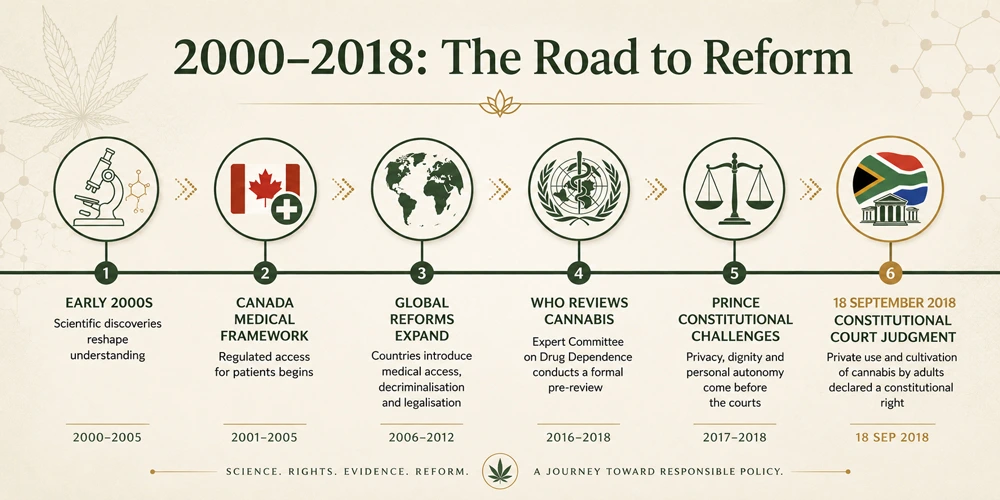
For much of the 20th century, cannabis was discussed primarily through the language of prohibition. By the beginning of the new millennium, however, that conversation was becoming more difficult to contain within criminal law alone.
Scientific research had identified THC, cannabinoid receptors and the human endocannabinoid system. Medical interest was returning. Courts were being asked to consider religious freedom, personal autonomy and privacy. At the same time, governments around the world were beginning to explore whether strict prohibition was the only possible policy response.
Between 2000 and 2018, these developments began to converge.
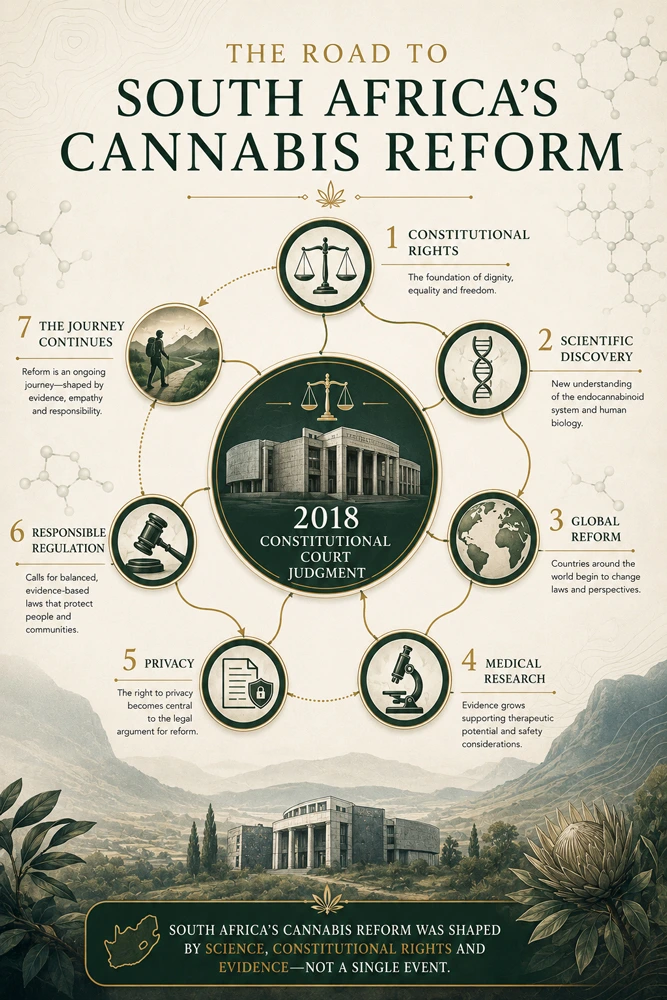
The result was not one uniform global reform movement. Different countries adopted different models, ranging from limited medical access and reduced criminal penalties to regulated adult-use markets. What connected these developments was a growing willingness to reconsider inherited cannabis laws through the lenses of science, public health, constitutional rights and practical regulation.
For South Africa, that reassessment would culminate in a landmark Constitutional Court judgment delivered on 18 September 2018.
A world beginning to reconsider cannabis
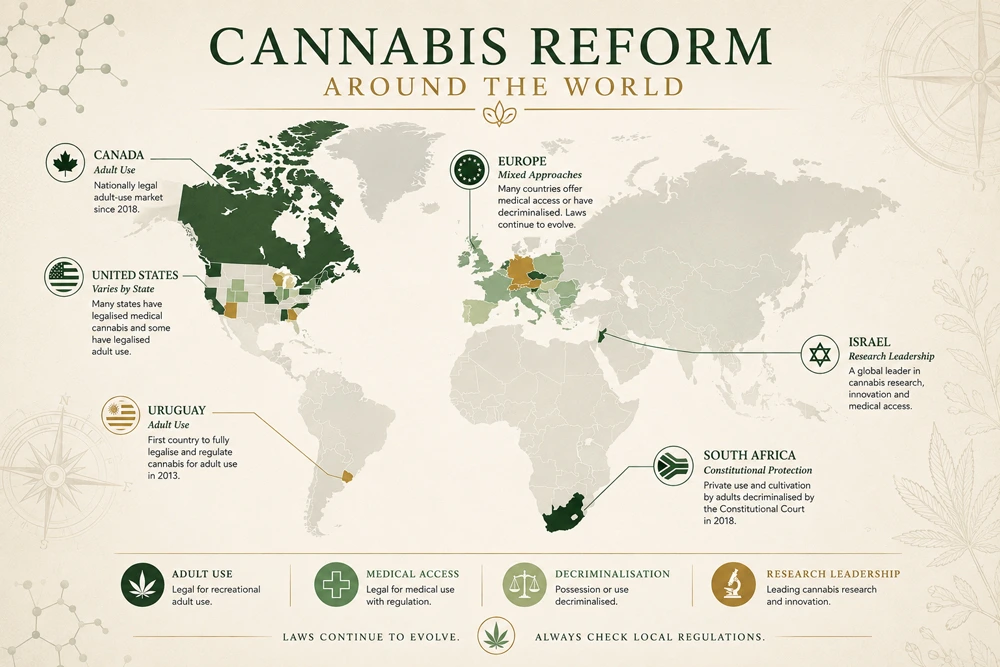
The early 2000s marked an important change in the international cannabis debate. The plant remained controlled under international drug conventions, but national governments retained some discretion in how those controls were applied within their own jurisdictions. This allowed certain countries to create medical-access systems while continuing to prohibit non-medical use.¹
Canada became an influential example. Its federal medical cannabis framework began developing in the early 2000s, creating a regulated route through which qualifying patients could access cannabis for medical purposes. The system evolved over time through legislation, court challenges and regulatory changes. By 2018, Canada had moved beyond medical access and introduced a nationally regulated adult-use framework under the Cannabis Act. The legislation came into force on 17 October 2018, with the government presenting it as a public-health and public-safety approach focused on regulated access, youth protection and reducing illicit-market activity.²
Elsewhere, reform took different forms. Uruguay established a nationally regulated adult-use framework in 2013. Several states in the United States introduced medical cannabis laws, while some later permitted adult non-medical use. Israel continued developing its medical cannabis research and regulatory systems, and several European countries adopted limited medical-access or decriminalisation policies.
These reforms were not identical, and they did not prove that cannabis was without risk. Rather, they demonstrated that policymakers were beginning to consider alternatives to blanket criminalisation. Public-health protections, product controls, age restrictions, impaired-driving laws and medical oversight increasingly became part of the discussion.
Science changes the policy conversation
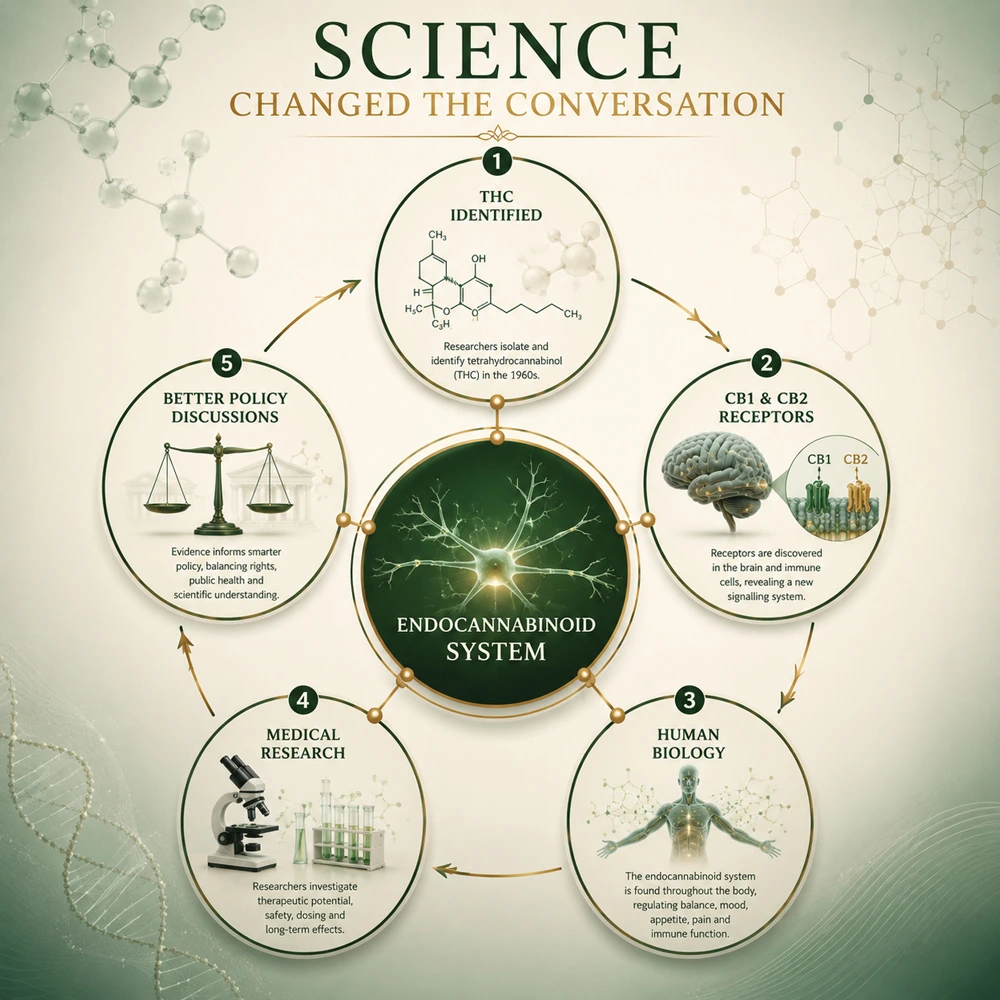
The changing legal environment cannot be separated from the scientific discoveries that preceded it.
By the 2000s, researchers understood that cannabinoids interacted with a biological system already present in the human body. This did not automatically establish cannabis as an effective or appropriate treatment for every condition. It did, however, provide a credible biological basis for further investigation.
Research increasingly examined individual cannabinoids, possible therapeutic applications, adverse effects, dependence, impairment, dosing and the differences between plant material and standardised pharmaceutical preparations. This evidence remained uneven, with stronger support for some applications than others, but it helped move the discussion away from treating cannabis as one simple or scientifically uniform substance.
International institutions also began reassessing the evidence.
In June 2018, the World Health Organization’s Expert Committee on Drug Dependence conducted its first formal pre-review of cannabis and cannabis-related substances under the international drug-control system. The review considered cannabis, cannabis resin, extracts, tinctures, THC and related compounds. The Committee also critically reviewed preparations regarded as pure cannabidiol, or CBD.³
The WHO made an important distinction: reviewing the scheduling of a substance is not the same as recommending it as a medical treatment. The organisation’s role was to assess matters such as harm, dependence, abuse potential and therapeutic usefulness. In 2018, it concluded that there was sufficient evidence to proceed with a fuller critical review of cannabis-related substances. It also recommended that preparations considered to be pure CBD should not be internationally controlled because CBD had not been found to have psychoactive properties or potential for abuse or dependence.³
This was significant because it reflected a broader shift towards evaluating cannabis and its components individually, using available evidence rather than treating every cannabis-derived substance as medically or pharmacologically identical.
South Africa’s first Prince judgment
South Africa’s constitutional journey did not begin in 2018.
One of the central figures in the country’s legal history is Garreth Prince, a Rastafarian law graduate who sought admission to the legal profession. Prince disclosed previous convictions for cannabis possession and stated that he intended to continue using cannabis as part of his religious practice. His case eventually reached the Constitutional Court, which delivered judgment in 2002.⁴
The case centred primarily on religious freedom, not on a general right for adults to use cannabis privately.
Prince argued that the prohibition of cannabis unjustifiably limited his right to practise his Rastafarian religion. The Court accepted that cannabis use formed part of his sincere religious practice, but the majority declined to create the exemption he sought. The judgment therefore did not legalise religious or private cannabis use.
Even though Prince was unsuccessful, the case was historically important. It required South Africa’s highest court to consider cannabis prohibition within the framework of the Constitution, rather than treating the issue purely as a question of criminal enforcement.
It also revealed how complex constitutional cannabis cases could be. Religious freedom, equality, enforcement, public health and the practical administration of exemptions all had to be weighed against one another.
The 2002 case did not end the legal debate. It became part of a longer constitutional journey.
Medical access begins to enter the South African framework
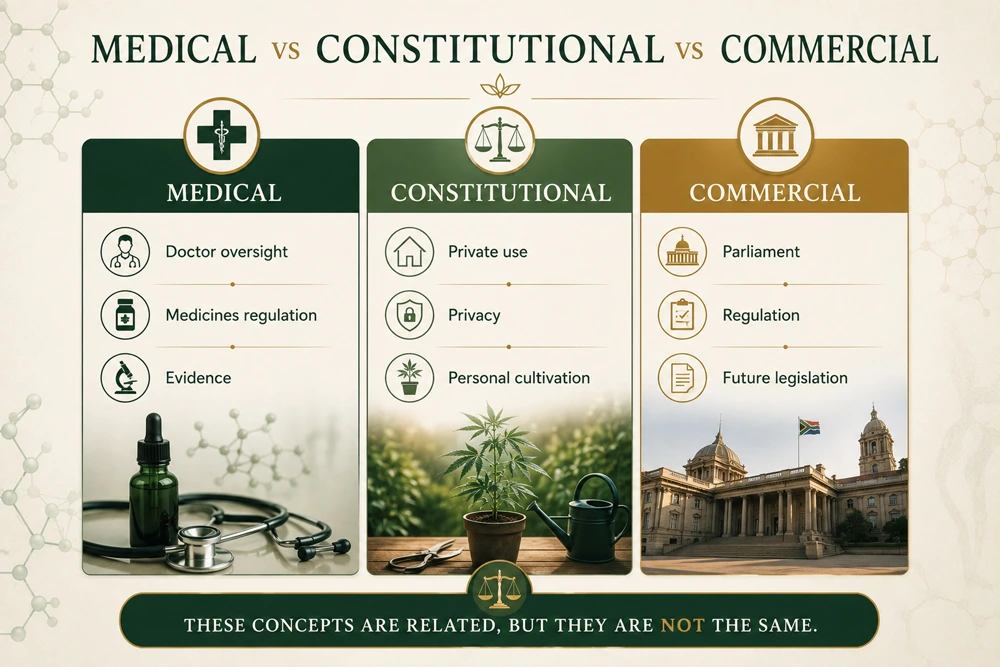
While constitutional litigation continued, South Africa’s medical and regulatory approach was also evolving.
Cannabis remained tightly controlled under the Medicines and Related Substances Act, but legal mechanisms existed through which authorised medical practitioners, researchers, analysts or veterinarians could apply for permission to use otherwise restricted substances under specified conditions. South Africa later developed clearer regulatory guidance for the cultivation of cannabis intended for medicinal and research purposes. The framework emphasised pharmaceutical quality, security, standard operating procedures and regulatory oversight rather than unrestricted commercial access.⁵
This distinction is important.
The development of a medicinal or research pathway did not mean that cannabis products were generally legal, that all cannabis preparations were recognised medicines, or that unregistered products could be marketed with treatment claims. Medical regulation required evidence, quality controls, authorised prescribing routes and compliance with medicines legislation.
Nevertheless, the existence of a regulated medicinal pathway showed that South African law was already beginning to distinguish between different contexts of cannabis use.
The privacy challenge reaches the courts
The case that produced the 2018 turning point began in the Western Cape High Court.
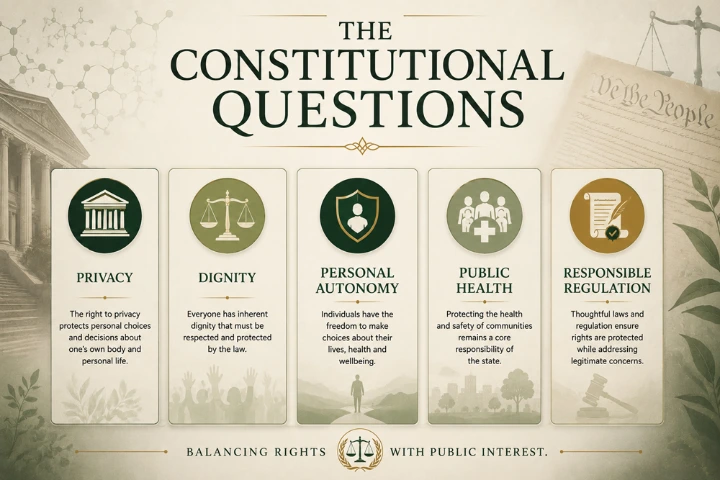
The applicants challenged provisions of the Drugs and Drug Trafficking Act and the Medicines and Related Substances Act that criminalised the possession, use, purchase and cultivation of cannabis. Unlike the earlier Prince case, the central constitutional argument was now based on the right to privacy.
Section 14 of the South African Constitution states that everyone has the right to privacy. It specifically protects people against unjustified searches of their person or home, searches of property, seizure of possessions and interference with private communications.⁶
The privacy right is not absolute. Like other rights in the Bill of Rights, it may be limited by a law of general application where that limitation is reasonable and justifiable in an open and democratic society. The legal question was therefore not simply whether cannabis carried risks. The Court had to consider whether criminalising an adult’s private possession, cultivation and use of cannabis for personal consumption was a constitutionally justifiable intrusion into private life.
The Western Cape High Court found that parts of the existing prohibition were constitutionally invalid. Because an order declaring national legislation invalid must be confirmed by the Constitutional Court, the matter proceeded to South Africa’s highest court.
The Constitutional Court’s 2018 judgment
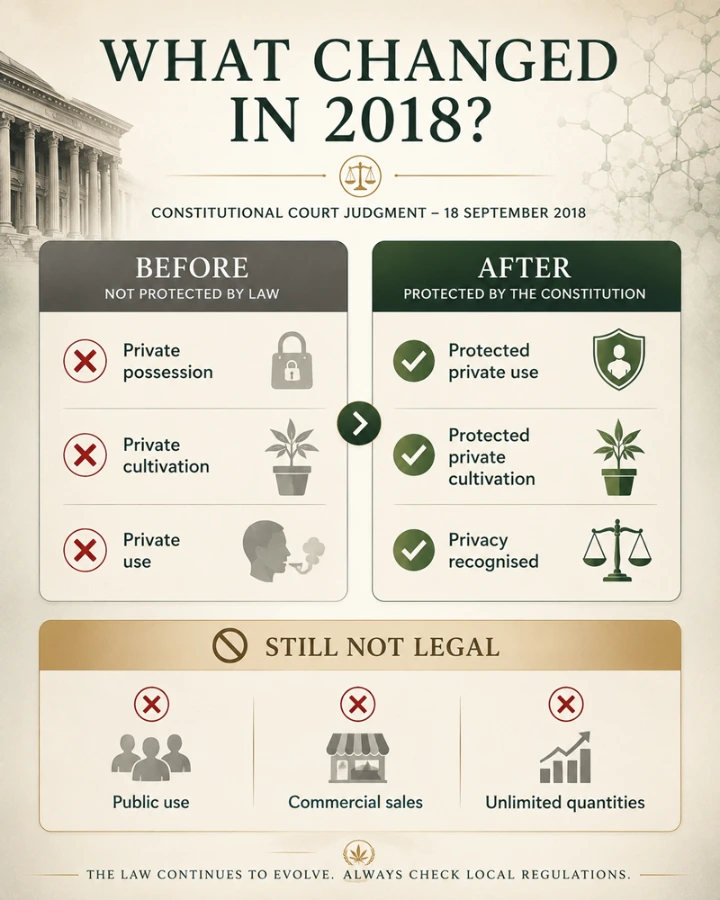
On 18 September 2018, the Constitutional Court delivered judgment in Minister of Justice and Constitutional Development and Others v Prince and Others. The Court confirmed that the existing laws were constitutionally invalid to the extent that they criminalised an adult’s private use or possession of cannabis for personal consumption in private, as well as the private cultivation of cannabis for that purpose.⁷
The judgment was grounded in the constitutional right to privacy.
This did not create an unrestricted right to cannabis. Instead, the Court recognised a protected sphere of personal adult conduct in private. The state could still regulate cannabis, protect children, address impaired driving, control commercial activity and prohibit conduct occurring outside the scope of the judgment.
The Court suspended the declaration of invalidity for 24 months to allow Parliament to correct the legislation. In the interim, it read words into the affected provisions so that adults would not be criminally liable for possessing, using or cultivating cannabis in private for personal consumption.⁷
The judgment represented a major change in the relationship between cannabis and South African criminal law. Private adult conduct that had previously exposed individuals to arrest and prosecution now received constitutional protection within defined limits.
What the judgment did not legalise
The 2018 ruling is often described simply as “cannabis legalisation”, but that description is misleading.
The judgment did not create a general commercial cannabis market.
It did not authorise unrestricted buying and selling, or legalise public consumption. Nor did it permit adults to supply cannabis to others without legal consequences. The judgment did not remove medicines regulation, approve unregistered products as treatments, or define what quantity would automatically be regarded as reasonable for personal use.
The Court also did not attempt to write an entire cannabis regulatory system. That responsibility remained with Parliament.
What the judgment did was narrower but still historically significant: it held that criminalising an adult’s private possession, use and cultivation of cannabis for personal consumption unjustifiably limited the right to privacy.
Understanding that distinction remains essential. Decriminalisation, constitutional protection, medical access and commercial legalisation are related concepts, but they do not mean the same thing.
A turning point, not the end of the journey
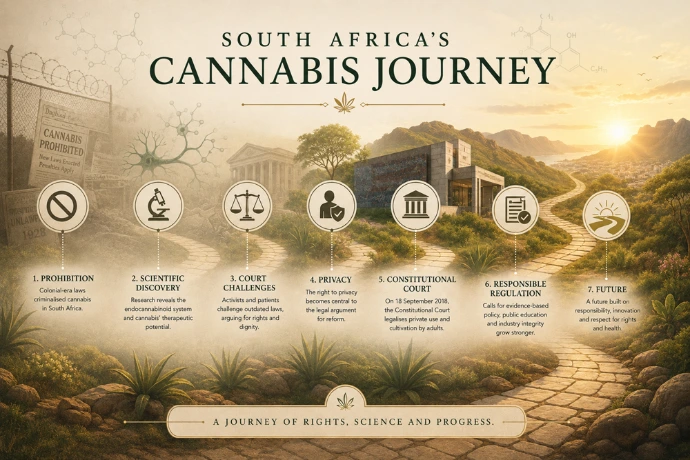
By the end of 2018, cannabis had entered a new historical phase.
Globally, countries were experimenting with medical programmes, decriminalisation and regulated adult-use models. The WHO had begun formally reassessing cannabis and related substances under the international scheduling system. Canada had implemented a national legal framework. In South Africa, the Constitutional Court had recognised that private adult cannabis use and cultivation fell within the protected sphere of personal privacy.²³⁷
Yet many questions remained unresolved.
How much cannabis could reasonably be considered personal? What qualified as a private place? How would adults legally obtain cannabis without a lawful commercial supply system? How should cultivation, possession, transport, public use and child protection be regulated? How would medicinal cannabis remain separate from general wellness products and non-medical use?
The 2018 judgment did not answer every question. It changed the constitutional starting point from which those questions would be addressed.
Cannabis was no longer governed only by the legacy of prohibition. It had become part of a wider discussion involving constitutional rights, scientific research, medicines regulation, public health and responsible governance.
For South Africa, 2018 was therefore not the conclusion of reform.
It was the beginning of the next chapter.
References
- World Health Organization. WHO Expert Committee on Drug Dependence review of cannabis. Geneva: WHO; 2018.
- Health Canada. Canada legalizes and strictly regulates cannabis. Ottawa: Government of Canada; 2018.
- World Health Organization. WHO Expert Committee on Drug Dependence review of cannabis: questions and answers. Geneva: WHO; 2018.
- Prince v President of the Law Society of the Cape of Good Hope and Others.
- South African Health Products Regulatory Authority. Guideline for the cultivation of cannabis and manufacture of cannabis-related pharmaceutical products for medicinal and research purposes. Pretoria: SAHPRA.
- Constitution of the Republic of South Africa, 1996, s 14.
- Minister of Justice and Constitutional Development and Others v Prince and Others (CCT108/17) [2018] ZACC 30; 2018 (6) SA 393 (CC).
- Russo EB. History of cannabis and its preparations in saga, science, and sobriquet. Chem Biodivers. 2007.
- Fischer B, Rehm J, Hall W. Cannabis legalization: adhering to public health best practice. Int J Drug Policy. 2019.
Disclaimer: This blog supports responsible cannabis use. The information contained in this article is for educational and informational purposes only and is not intended as health or medical advice. Always consult a physician or other qualified health provider regarding any questions you may have about a medical condition or health objectives.