The Complete History of Cannabis – A Global Timeline: Part 3
Part of the Cannabis Education Series. This article continues our exploration into the period where cannabis moved from traditional use into recognised Western medicine.
Read more:
- The Complete History of Cannabis – A Global Timeline: Part 1
- The Complete History of Cannabis – A Global Timeline: Part 2
1800 – 1930
Cannabis as Recognised Medicine
By the 19th century, cannabis had moved beyond traditional and regional use into the formal structures of Western medicine. What had long been part of Ayurvedic and traditional healing systems began to appear in European and British medical practice, shaped by colonial exchange and scientific curiosity¹².
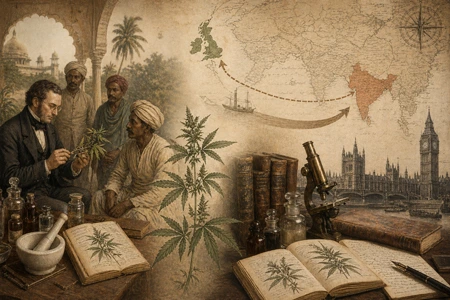
One of the key figures in this transition was Irish physician William Brooke O’Shaughnessy, who, after observing cannabis use in India, introduced it into British medical research in the 1830s². His work documented its potential in treating pain, muscle spasms and convulsive disorders, contributing to its acceptance within Western pharmacopoeias.
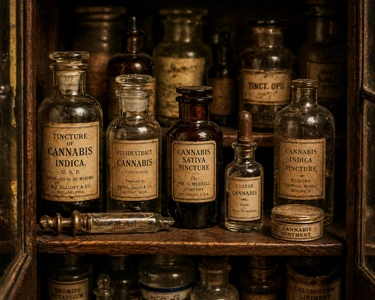
By the mid-to-late 1800s, cannabis extracts and tinctures were widely available across Europe and the United States. Pharmaceutical companies produced standardised preparations, and medical texts referenced cannabis as a treatment for conditions including insomnia, migraines, digestive discomfort and chronic pain¹⁵. At this stage, cannabis was neither controversial nor marginal. It was part of mainstream therapeutic practice.
In colonial contexts such as South Africa, however, the plant’s position became more complex. While cannabis continued to be used within indigenous communities, early legislative frameworks began to emerge in the early 20th century that would shape its future regulation³. These shifts were influenced not only by medical considerations, but also by broader social, political and racial dynamics within colonial governance structures.
The transition from accepted medicine to a regulated substance did not happen abruptly. Instead, it unfolded gradually as Western medicine evolved. The development of more precise pharmaceutical drugs, alongside challenges in standardising cannabis dosage and potency, contributed to its declining prominence in formal medical practice¹². Unlike single-compound medicines, cannabis preparations varied in strength, making consistency difficult within emerging medical standards.
At the same time, international conversations around drug control were beginning to take shape. Substances that had once been integrated into both traditional and medical systems were increasingly evaluated through regulatory frameworks that prioritised uniformity, control and classification².
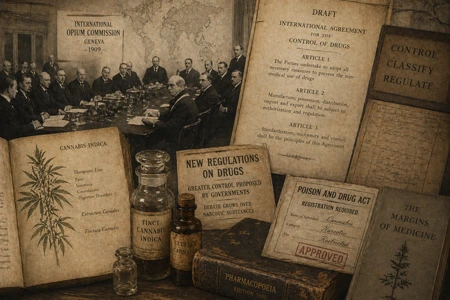
By the early 20th century, cannabis was still present in medical texts, but its role was diminishing. What had once been a widely accepted therapeutic tool was slowly moving toward the margins of formal medicine.
This period represents a critical turning point.
Cannabis was not removed from medicine because it lacked use. Rather, it became increasingly difficult to fit within a rapidly changing pharmaceutical and regulatory landscape. A shift that would set the stage for the formalised prohibition policies that followed.
References
- Abel, E.L. (1980). Marihuana: The First Twelve Thousand Years.
- Booth, M. (2003). Cannabis: A History.
- Du Toit, B.M. (1975). Cannabis use in South Africa. Journal of Psychedelic Drugs.
- Li, H.-L. (1974). An archaeological and historical account of cannabis in China. Economic Botany.
- Russo, E.B. (2007). History of cannabis and its preparations in saga, science, and sobriquet. Chemistry & Biodiversity.
Disclaimer: This blog supports responsible cannabis use. The information contained in this article is for educational and informational purposes only and is not intended as health or medical advice. Always consult a physician or other qualified health provider regarding any questions you may have about a medical condition or health objectives.