The Complete History of Cannabis – A Global Timeline: Part 2
Part of the Cannabis Education Series. This is the second article in the series, building on our exploration of ancient civilisations and early medicinal use.
1000 – 1800
Trade Routes, Empire & the Spread of Dagga
By the second millennium, cannabis was no longer confined to its early centres of cultivation. Trade networks stretching across Asia, the Middle East, and Africa facilitated not only the exchange of goods, but also plants, medicines and agricultural knowledge¹².
If you would like to understand the earliest origins of cannabis cultivation and medicine, read Part 1 of this timeline, which explores the plant's ancient roots in Asia and early medical traditions.
Read more: The Complete History of Cannabis – Introduction (Part 1).
Along the Silk Road and maritime trade routes of the Indian Ocean, cannabis travelled with merchants and healers. Arab traders are widely understood to have contributed to the plant’s diffusion into East Africa, where it became integrated into local practices over time². As with many medicinal and agricultural crops, its movement was gradual and adaptive, shaped by climate, culture and commerce.
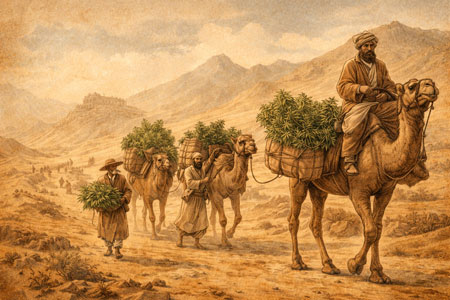
In parts of Africa, cannabis took on regionally distinct meanings. It was cultivated for fibre, used in ritual contexts and incorporated into traditional healing systems³. By the time European colonial powers intensified their presence along African coasts, cannabis was already established in several regions.
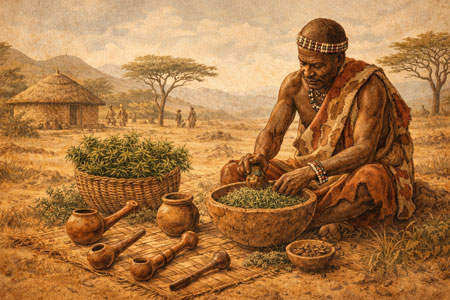
For a deeper look at how cannabis became integrated into African cultures and societies, explore our article on African cannabis history.
Read more: African History of Cannabis.
In Southern Africa, historical and anthropological accounts suggest that cannabis had become part of indigenous communities before sustained Dutch colonial settlement in the 17th century³. The word dagga, now commonly used in South Africa, is believed to derive from Khoikhoi or related linguistic roots, reflecting local familiarity with the plant long before formal legislation existed²³.
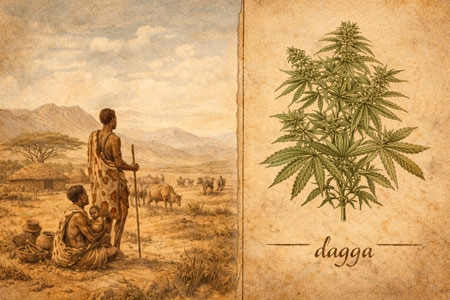
Cannabis also carries a deep cultural history across Africa. You can explore how African communities shape global cannabis traditions.
Read more: From the Motherland to the Mainstream.
During the colonial period (mid-1600s onward), cannabis occupied an ambiguous position. European settlers were often aware of its use among indigenous populations, yet early colonial administrations were more concerned with trade, land control and labour systems than with systematic drug regulation. Cannabis was neither centrally regulated nor universally prohibited during this period. It existed largely within customary use and informal exchange.
At the same time, hemp, a non-intoxicating variety of cannabis cultivated primarily for fibre, played a recognised economic role in European empires. Hemp was essential for rope, sails and naval rigging, making it strategically valuable to maritime powers such as Britain and the Netherlands¹². The plant, therefore, occupied two parallel identities globally: an industrial resource and a traditional medicinal crop.
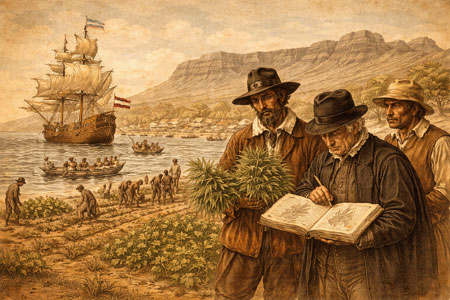
By the late 18th century, attitudes toward cannabis were beginning to shift in parts of the world. As colonial governance structures expanded and European medical systems became more formalised, substances previously embedded in local practice were increasingly scrutinised through imperial administrative lenses².
However, widespread criminalisation had not yet taken shape. Cannabis remained, for the most part, a plant integrated into regional cultures rather than a centrally controlled substance.
The era of formalised prohibition would emerge later, shaped not only by medical debates, but by political, racial and international policy forces that would redefine the plant’s legal status across continents.
References
Abel, E.L. (1980). Marihuana: The First Twelve Thousand Years.
Booth, M. (2003). Cannabis: A History.
Du Toit, B.M. (1975). Cannabis use in South Africa. Journal of Psychedelic Drugs.
Li, H.-L. (1974). An archaeological and historical account of cannabis in China. Economic Botany.
Russo, E.B. (2007). History of cannabis and its preparations in saga, science, and sobriquet. Chemistry & Biodiversity.
Disclaimer: This blog supports responsible cannabis use. The information contained in this article is for educational and informational purposes only and is not intended as health or medical advice. Always consult a physician or other qualified health provider regarding any questions you may have about a medical condition or health objectives.