The Complete History of Cannabis – A Global Timeline: Part 5
Part of the Cannabis Education Series. This article explores the period in which scientific research began to reshape the understanding of cannabis, moving the conversation from prohibition toward biology and evidence.
Read more:
- The Complete History of Cannabis – A Global Timeline: Part 1
- The Complete History of Cannabis – A Global Timeline: Part 2
- The Complete History of Cannabis – A Global Timeline: Part 3
- The Complete History of Cannabis – A Global Timeline: Part 4
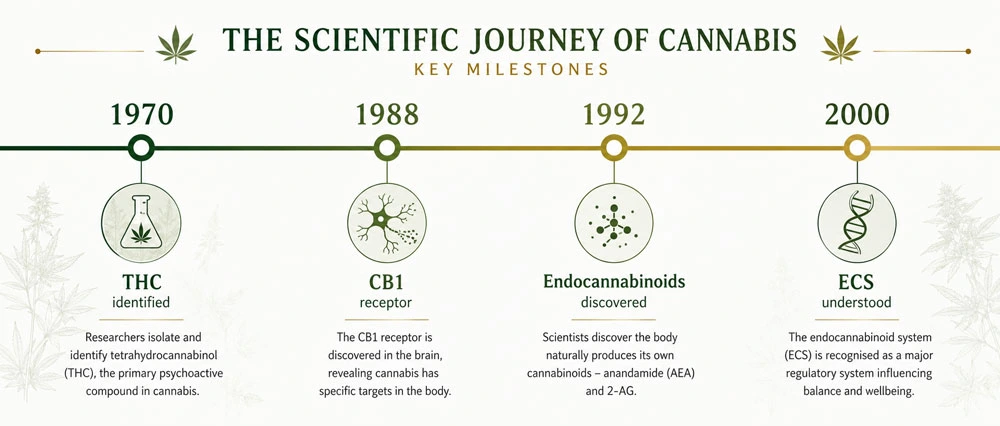
1970 – 2000
Scientific Rediscovery: THC & The Endocannabinoid System
By the 1970s, cannabis was firmly positioned within global prohibition frameworks. Yet, despite legal restrictions, scientific curiosity surrounding the plant did not disappear. Instead, research continued quietly, laying the groundwork for one of the most significant shifts in understanding cannabis. Not as a social issue, but as a biological one¹².
A breakthrough came in 1964, when Israeli chemist Raphael Mechoulam and his team successfully isolated and identified delta-9-tetrahydrocannabinol (THC), the primary psychoactive compound in cannabis². For the first time, scientists could begin to understand how a specific component of the plant interacted with the human body.
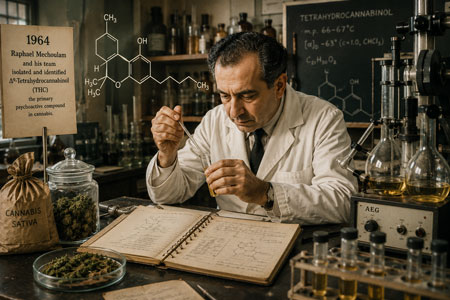
This discovery marked a turning point. Cannabis was no longer viewed only as a whole plant with variable effects. It could now be studied at a molecular level. Researchers began identifying additional compounds, later known as cannabinoids, each contributing in different ways to the plant’s overall effects⁵.
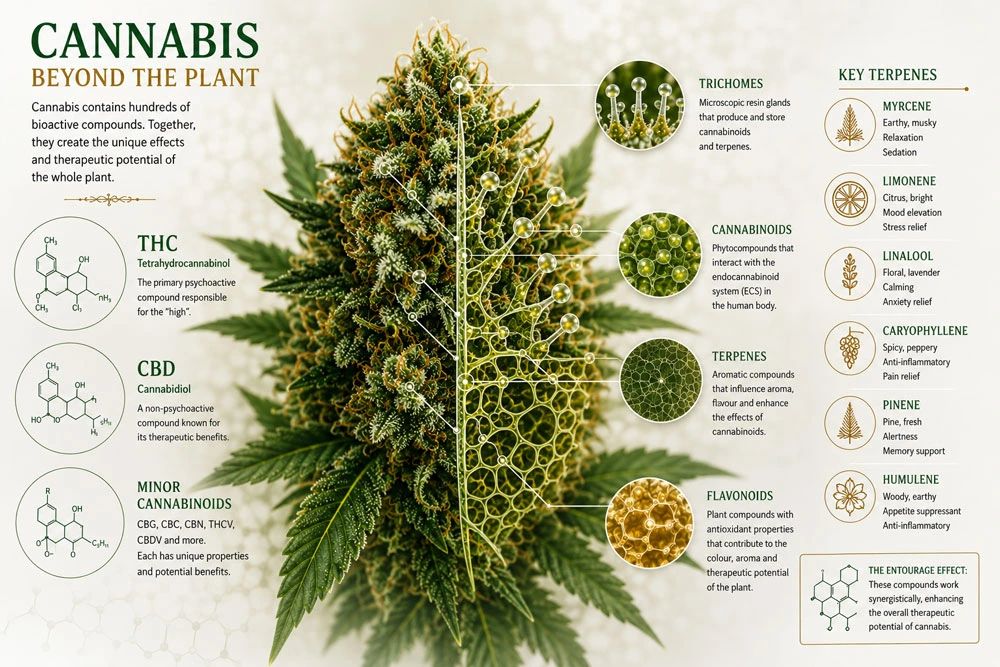
However, one question remained unanswered: How does cannabis actually affect the body?
The answer began to emerge in the late 1980s and early 1990s with the discovery of the endocannabinoid system (ECS ¹). Scientists identified specific receptors in the human body, which are now known as CB1 and CB2 receptors, that respond to cannabinoids. These receptors are found throughout the brain, nervous system and immune system.
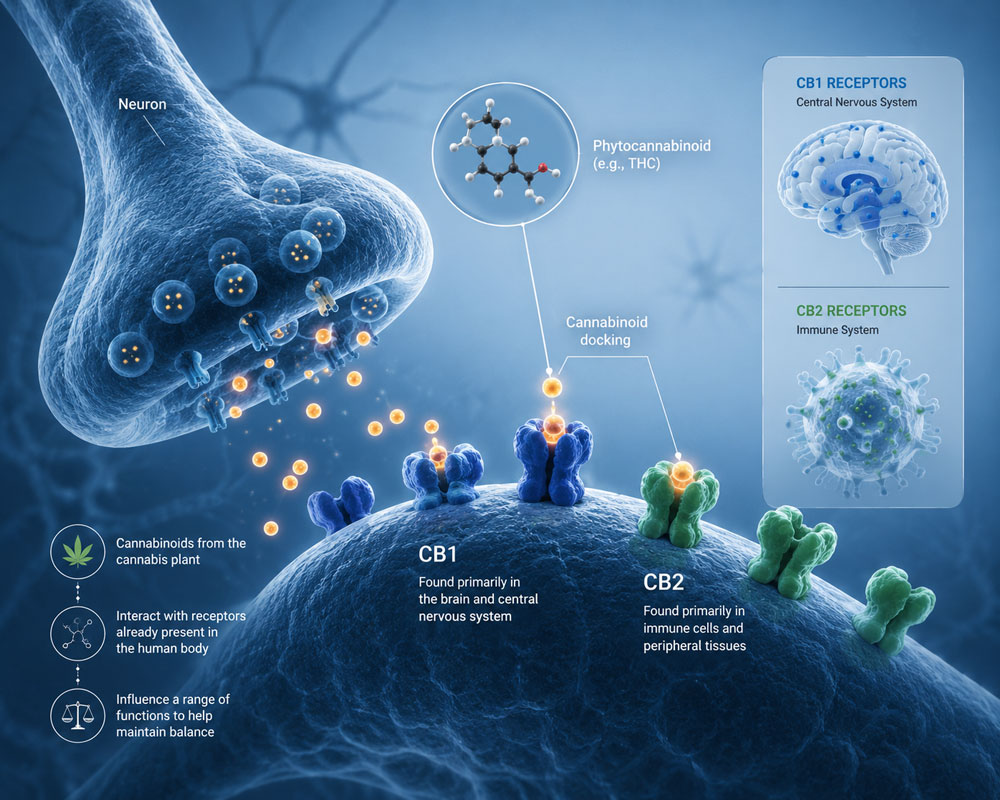
Shortly thereafter, researchers discovered that the human body produces its own cannabinoid-like compounds, known as endocannabinoids¹⁵. This revealed something unexpected: cannabis does not introduce an entirely foreign effect. It interacts with a system that already exists within the body.
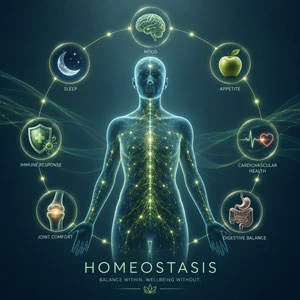
The endocannabinoid system is now understood to play a role in maintaining internal balance, or homeostasis, influencing functions such as mood, sleep, appetite, pain perception and immune response¹⁵. While research during this period was still developing, these discoveries fundamentally changed how cannabis was understood.
Importantly, this scientific progress occurred within a broader context of legal restriction. In many countries, including South Africa, cannabis remained prohibited, limiting the scope and accessibility of research³. As a result, early studies were often constrained, and knowledge developed gradually rather than rapidly.
Despite these limitations, the late 20th century marked the beginning of a new phase in cannabis history, but one grounded in evidence rather than assumption.
Cannabis was no longer viewed solely through the lens of policy or prohibition. It had become a subject of legitimate scientific inquiry.
This shift did not immediately change legal frameworks, but it began to influence how researchers, healthcare professionals and policymakers approached the plant.
Understanding cannabis now requires more than historical or legal context. It required biological understanding.
This period laid the foundation for the modern conversation around cannabis. One that continues to evolve as research expands and regulatory environments adapt.
References
- Abel, E.L. (1980). Marihuana: The First Twelve Thousand Years.
- Booth, M. (2003). Cannabis: A History.
- Du Toit, B.M. (1975). Cannabis use in South Africa. Journal of Psychedelic Drugs.
- Li, H.-L. (1974). An archaeological and historical account of cannabis in China. Economic Botany.
- Russo, E.B. (2007). History of cannabis and its preparations in saga, science, and sobriquet. Chemistry & Biodiversity.
Disclaimer: This blog supports responsible cannabis use. The information contained in this article is for educational and informational purposes only and is not intended as health or medical advice. Always consult a physician or other qualified health provider regarding any questions you may have about a medical condition or health objectives.