Glaucoma is often called the “silent thief of sight” because many people feel fine while damage quietly progresses. At its core, glaucoma is a group of diseases that injure the optic nerve, and intraocular pressure (IOP) is the most important modifiable risk factor we can target with treatment.¹
Why “steady pressure” matters more than “occasional pressure drops”
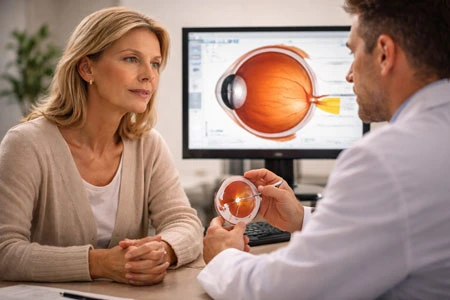
IOP is influenced by how fluid inside the eye (aqueous humour) is produced and drained. If drainage is impaired, pressure rises and stresses the optic nerve over time.² The only proven way to slow glaucoma progression is still consistent, long-term IOP lowering.¹
Here’s the real-world problem: most glaucoma care still relies on daily eye drops, and adherence is hard. Missed doses, incorrect technique, side effects, and “treatment fatigue” can all translate into worse pressure control. That’s one reason 2026 glaucoma care is increasingly focused on reliability, not just medication choice.
The 2026 shift: sustained-release options (iDose TR)
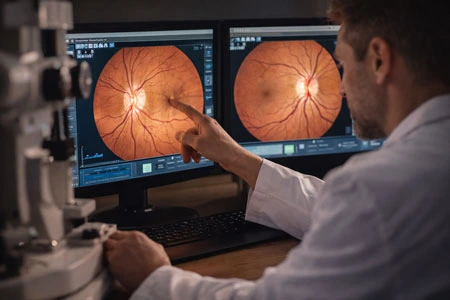
One notable innovation moving into broader use is iDose TR, a tiny intracameral implant that delivers a prostaglandin analogue continuously inside the eye, aiming for steadier control without the daily drop routine.
In clinical trial data (12-month pivotal results), a travoprost intracameral implant was shown to be effective for IOP lowering versus timolol, supporting the concept of long-duration delivery.³ And more recent regulatory news suggests momentum: in January 2026, the FDA approved updated labelling allowing repeat administration under a defined protocol in suitable patients (with attention to corneal endothelial health).
This matters because glaucoma is lifelong. The more we can reduce day-to-day “human error” in dosing, the more stable care can become.
Where cannabis fits (and where it doesn’t)
Cannabis became part of the glaucoma conversation decades ago because THC can temporarily lower IOP.⁴ The eye also has cannabinoid receptors, which is why researchers continue investigating cannabinoid pathways in ocular physiology.⁵
Read more: The Endocannabinoid System.
But here’s the practical limitation: the IOP-lowering effect of inhaled or oral THC is typically short-lived (hours), meaning round-the-clock control would require frequent dosing, including overnight, bringing side effects, impairment risk, and tolerance into the equation.⁵-⁶ In other words: cannabis may create a dip in pressure, but glaucoma care needs a stable baseline.
Read more: Cannabis dosage 101.
There’s another subtle issue: if someone uses cannabis before an eye test, it may transiently lower IOP and potentially confuse the assessment. This is why transparency with your eye-care provider matters.⁷
Read more: Cannabis and Homeostasis.
Conclusion
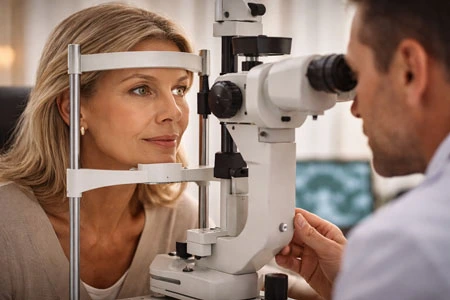
For World Glaucoma Day, the most powerful message is still simple:
Get screened (especially if you have a family history or are over 40).
Treat early.
Prioritise consistent IOP control.
Cannabis research in eye health is scientifically interesting, but it is not a replacement for standard glaucoma therapy. Meanwhile, the most exciting 2026 direction is adherence-independent treatments designed to keep pressure controlled even when life gets busy.
References
Weinreb RN, Aung T, Medeiros FA. The pathophysiology and treatment of glaucoma. JAMA. 2014.
Jonas JB et al. Glaucoma. The Lancet. 2017.
Sarkisian SR et al. Travoprost Intracameral Implant for Open-Angle Glaucoma or Ocular Hypertension: 12-Month Results of a Randomised, Double-Masked Trial. Ophthalmology and Therapy. 2024.
Tomida I et al. Perspective: Cannabinoids and glaucoma. Br J Ophthalmol. 2004.
Rapino C et al. Cannabinoids and the eye. Survey of Ophthalmology. 2020.
Reno Eye Care: iDose TR and the 2026 care shift (adherence + sustained release).
Glaucoma Physician (Jan 28, 2026): FDA allows repeat administration (updated labelling).
Disclaimer: This blog supports responsible cannabis use. The information contained in this article is for educational and informational purposes only and is not intended as health or medical advice. Always consult a physician or other qualified health provider regarding any questions you may have about a medical condition or health objectives.