Why the Conversation Matters
Heart health is often discussed in terms of cholesterol, blood pressure, and exercise. Less discussed, but increasingly researched, is the role of the nervous system, stress response, and inflammation in long-term cardiovascular wellbeing.
As interest in cannabidiol (CBD) grows, many people are asking whether CBD may play a role in supporting heart health. The answer, as with most cannabis research, is nuanced.
Read more: All About CBD.
This article explores what current research suggests, where evidence is still limited, and why cautious, informed use matters.

Understanding the Context
Cardiovascular health is influenced by a complex interaction between vascular function, inflammatory processes, autonomic nervous system regulation, and metabolic factors. In recent years, cannabidiol (CBD), a non-intoxicating cannabinoid derived from Cannabis sativa, has attracted scientific interest for its potential effects on several of these underlying systems.
While public interest has grown rapidly, clinical evidence remains emergent rather than conclusive. Understanding what the research does and does not show is essential for responsible interpretation.
Read more: Cannabis and Homeostasis.
The Stress–Heart Connection
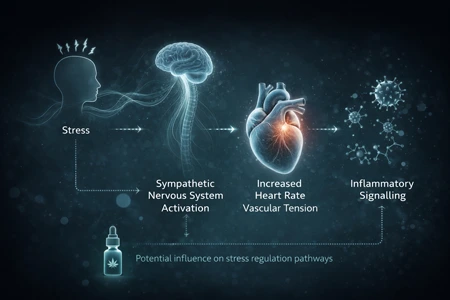
Chronic stress activates the sympathetic nervous system – the “fight or flight” response. Over time, this can contribute to elevated heart rate, increased blood pressure, vascular tension, and systemic inflammation.
CBD interacts with the endocannabinoid system (ECS), which helps regulate stress response, mood, sleep, and autonomic balance. Researchers are particularly interested in CBD’s interaction with serotonin receptors and its potential influence on nervous system regulation.¹
Read more: The Endocannabinoid System.
While this does not mean CBD treats heart disease, it may help explain why CBD is being studied in relation to cardiovascular stress pathways.
What Research Currently Suggests
Early and preclinical studies suggest that CBD may:
Support vascular relaxation under stress conditions²
Influence inflammatory markers associated with cardiovascular strain³
Affect stress-related blood pressure responses in controlled settings⁴
Read more: Can Cannabis Help with Inflammation and Mobility?
Importantly, these findings are context-specific and often based on small human studies or animal models. They do not establish CBD as a treatment for heart conditions.
What Research Does Not Confirm
At present, there is no conclusive clinical evidence that CBD:
Treats heart disease
Replaces blood pressure or cardiac medication
Prevents cardiovascular events
CBD should never be used as a substitute for prescribed heart medication, and interactions with cardiovascular drugs are possible.
Read more: CBD vs THC.
Safety, Dosing & Medical Guidance
CBD is generally well tolerated, but heart health adds an extra layer of responsibility. Factors such as dosage, format, timing, and existing medication matter.
Anyone with a heart condition, or taking blood pressure or anticoagulant medication, should consult a qualified healthcare professional before using CBD.⁵
Read more: Cannabis Dosing 101.
A Calm, Informed Perspective
CBD’s potential role in heart health is best understood through a systems lens: nervous system regulation, stress reduction, and inflammatory balance — not quick fixes or miracle claims.
As research evolves, informed, cautious use remains essential.

References
Russo EB. Clinical endocannabinoid deficiency reconsidered.
Stanley CP et al., Cannabidiol and vascular function.
Burstein S. Cannabidiol anti-inflammatory mechanisms.
Jadoon KA et al., Effects of cannabidiol on blood Attachment point stress response.
FDA / MHRA guidance on CBD interactions
Disclaimer: This blog supports responsible cannabis use. The information contained in this article is for educational and informational purposes only and is not intended as health or medical advice. Always consult a physician or other qualified health provider regarding any questions you may have about a medical condition or health objectives.