World Kidney Day (WKD) is observed annually on the second Thursday of March. In 2026, it falls on 12 March, continuing the global campaign theme: “Are Your Kidneys OK? Detect Early, Protect Kidney Health.”¹
Led by the International Society of Nephrology (ISN) and the International Federation of Kidney Foundations (IFKF), this campaign raises awareness about kidney disease risk factors, screening, and early intervention.¹
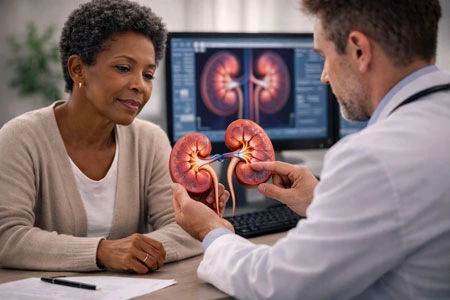
Your kidneys filter approximately 180 litres of blood daily, regulating fluid balance, electrolytes, blood pressure, acid–base status and waste removal.² Despite their essential role, kidney disease often develops silently, with symptoms appearing only after significant function has been lost.² Early detection remains the most effective protective strategy.
The Global Burden of Chronic Kidney Disease
Chronic kidney disease (CKD) affects approximately 10% of the global population and is recognised as one of the fastest-growing non-communicable diseases worldwide.² CKD is independently associated with increased cardiovascular risk and premature mortality.³
The primary risk factors include:
Diabetes mellitus
Hypertension
Cardiovascular disease
Obesity
Family history of kidney disease²
CKD is diagnosed through two simple tests:
Estimated glomerular filtration rate (eGFR)
Urine albumin-to-creatinine ratio (ACR)²
According to KDIGO clinical practice guidelines, early identification and blood pressure control can significantly slow progression and reduce long-term complications.⁴ Screening is particularly important for high-risk individuals.
Inflammation, Metabolic Stress & Renal Function
Kidney health is closely connected to metabolic regulation. Persistently elevated blood glucose and uncontrolled blood pressure damage the delicate glomerular capillaries responsible for filtration.³
Chronic low-grade inflammation further contributes to fibrosis and structural decline in kidney tissue.⁵ Over time, this inflammatory burden accelerates loss of function.
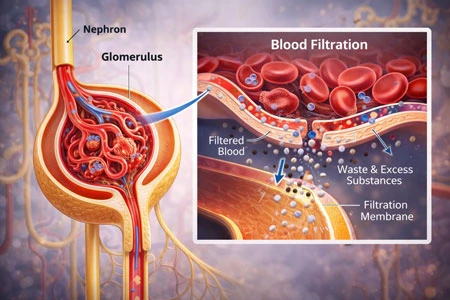
This reinforces a core principle: protecting kidney health requires systemic balance, cardiovascular stability, metabolic control, and inflammatory regulation.⁴ Lifestyle measures such as balanced nutrition, movement, stress management, and smoking cessation remain foundational pillars of kidney protection.
Cannabis, CBD & Kidney Health: Current Evidence
At Cannabis Oil Research, we approach plant medicine through a cautious, evidence-led lens.
Observational Evidence
Current population studies do not consistently demonstrate that cannabis use accelerates kidney function decline in generally healthy adults.⁶ However, evidence in patients with established CKD remains limited and inconclusive.⁶ Further controlled research is required.
Mechanistic Research
Preclinical models suggest cannabidiol (CBD) exhibits anti-inflammatory and antioxidant effects that may reduce markers associated with experimental kidney injury.⁷ These mechanistic insights are promising but have not yet translated into routine clinical kidney therapies.⁷
Clinical Caution
In advanced CKD (stages 4–5), cannabinoid use warrants careful supervision due to altered pharmacokinetics and potential drug interactions.⁸ Nephrology reviews consistently emphasise that robust clinical trials are still needed.⁸
The responsible approach is clear: individuals with kidney disease should consult their healthcare provider before initiating cannabis or CBD products.
Read more: Cannabis Dosing 101.

Protecting Your Kidneys in 2026
In alignment with World Kidney Day’s message¹ and international nephrology guidance⁴:
Know your risk profile.
Monitor blood pressure regularly.
Request kidney function screening if at risk.
Maintain metabolic and inflammatory balance.
Discuss all supplements and plant-based therapies with a clinician.

Kidney disease may be silent, but prevention is proactive. World Kidney Day 2026 invites us to ask a simple question: Are your kidneys OK?
References
International Society of Nephrology & International Federation of Kidney Foundations. World Kidney Day Campaign Materials. WorldKidneyDay.org.
Bikbov B et al. Global, regional, and national burden of chronic kidney disease. The Lancet. 2020;395(10225):709–733.
Go AS et al. Chronic kidney disease and the risks of death, cardiovascular events, and hospitalisation. New England Journal of Medicine. 2004;351:1296–1305.
KDIGO 2024 Clinical Practice Guideline for the Evaluation and Management of Chronic Kidney Disease. Kidney International Supplements. 2024.
Ruiz-Ortega M et al. Targeting inflammation in chronic kidney disease. Journal of the American Society of Nephrology. 2020;31(5):979–988.
Rein JL. The nephrologist’s guide to cannabis and cannabinoids. Clinical Journal of the American Society of Nephrology. 2020;15(4):609–612.
Stanley CP et al. Cannabidiol attenuates experimental diabetic nephropathy. American Journal of Physiology – Renal Physiology. 2015;308:F1012–F1021.
Rizk DV et al. Cannabis use in patients with kidney disease: a review. Kidney International Reports. 2022;7(2):266–276.
Disclaimer: This blog supports responsible cannabis use. The information contained in this article is for educational and informational purposes only and is not intended as health or medical advice. Always consult a physician or other qualified health provider regarding any questions you may have about a medical condition or health objectives.