We all age. But what is actually happening beneath the surface, and could the endocannabinoid system or cannabis have any part to play in how well we age?
For centuries, humans have searched for ways to live longer. Today, science is asking a slightly different question. It has changed from "How do we add more years to life?" to "How do we add more healthy years?"
This distinction between lifespan and healthspan has become central to healthy ageing research. The World Health Organization describes healthy ageing in terms of maintaining the functional ability that enables wellbeing as we grow older.¹ In other words, ageing well isn't necessarily about reaching 100. It's about maintaining the strength, mobility, cognition, independence and resilience that allow us to continue doing the things that matter to us.
Increasingly, researchers are discovering that ageing isn't one single process. It results from multiple interconnected biological changes occurring throughout the body.
Ageing Begins Long Before We See It
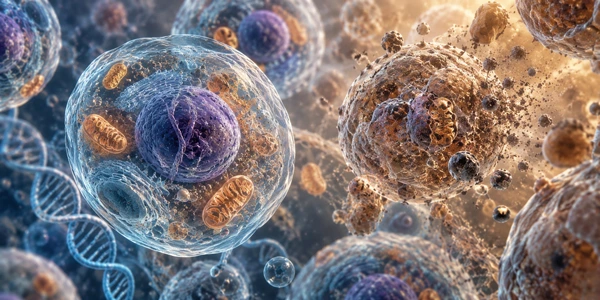
Wrinkles and grey hair may be the visible signs, but some of the most important changes happen at cellular level.
A landmark scientific framework known as the Hallmarks of Ageing identifies 12 interconnected biological processes associated with ageing. These include genomic instability, telomere attrition, changes in gene regulation, mitochondrial dysfunction, declining cellular housekeeping, chronic inflammation, cellular senescence and changes to the gut microbiome.²
Throughout life, our cells continually repair DNA, remove damaged proteins, recycle worn-out components, respond to stress and replace damaged cells. As we grow older, some of these maintenance and repair processes become less efficient.
Mitochondrial function changes, and stem-cell function can decline. Damaged proteins become harder to manage, and some cells enter senescence, meaning they stop dividing but remain metabolically active and can influence surrounding tissue.²
Importantly, these processes don't occur independently, but rather they interact with one another, contributing to the wider physiological changes associated with ageing.
From Cells to Muscle, Heart and Brain
As biological ageing progresses, body composition and physiological function can gradually change. We see how muscle mass, strength and power may decline. Bone remodelling changes, and even blood vessels can become stiffer. Immune responses alter, while metabolic regulation and the body's ability to recover from physical stress may become less efficient. The brain also changes with age, although normal ageing should never simply be equated with dementia.
It is also important to understand that people don't age at identical rates. Genetics plays a role, alongside environmental exposures and behaviours accumulated across the lifespan. This helps explain why two people of the same chronological age can have remarkably different levels of physical and cognitive function. Your chronological age tells us how many years you've lived, but your biological age reflects a much more complicated collection of processes occurring within the body.
What Is “Inflammaging”?
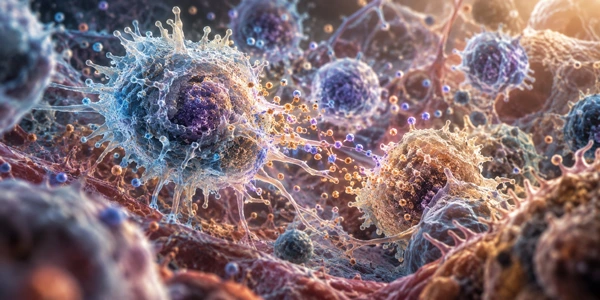
One particularly interesting part of this biological story is chronic, low-grade inflammation, which researchers are using the term inflammaging to describe the persistent inflammatory activity associated with increasing age.
Chronic inflammation is now recognised as one of the hallmarks of ageing and interacts with several other ageing processes.²
This matters because inflammatory signalling is connected with immune function, cardiovascular health, metabolism, neurological function and tissue repair. It also leads researchers towards another biological system of growing interest in ageing science, and which we have discussed before namely the endocannabinoid system.
What Does the Endocannabinoid System Have to Do With Ageing?
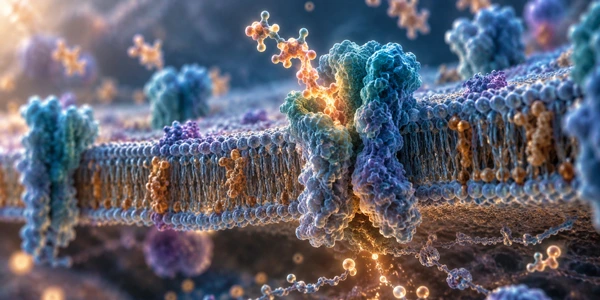
The endocannabinoid system, or ECS, is a signalling network found throughout the brain and body. It includes naturally produced molecules called endocannabinoids, cannabinoid receptors (principally CB1 and CB2) and enzymes involved in producing and breaking down these signalling molecules.
The ECS helps regulate numerous physiological processes, including aspects of neurological signalling, immune activity, appetite, metabolism, stress responses and pain processing. Research indicates that elements of this system also change with age.³⁻⁵
That raises an important scientific question of "Could influencing the endocannabinoid system affect some of the biological processes associated with ageing?", because compounds found in cannabis interact with the ECS and other biological targets, cannabinoids have become part of this emerging area of research.
Could Cannabis Play a Role in Healthy Ageing?
This is where separating interesting science from established medicine becomes essential.
A 2025 systematic review specifically investigated cannabis, cannabinoids, ageing and longevity. Researchers identified only 18 studies directly examining the subject. 11 preclinical studies and seven involving humans.⁶
Some preclinical findings involving cannabinoids such as CBD (cannabidiol) and THC (Δ9-tetrahydrocannabinol) have generated research interest around inflammation, cognition, sleep, memory and other ageing-related processes.⁶ Research into the ECS has also explored its possible relevance to neuroinflammation and age-related changes in the brain.⁴,⁵
But laboratory findings, animal experiments and early human research are not the same as demonstrating that cannabis slows human ageing.
At present, there is insufficient clinical evidence to conclude that cannabis, CBD or THC slows biological ageing, extends human lifespan or increases healthspan.
But cannabinoids may interact with biological systems involved in ageing. This makes them interesting subjects for further research.
THC, CBD and the Older Body
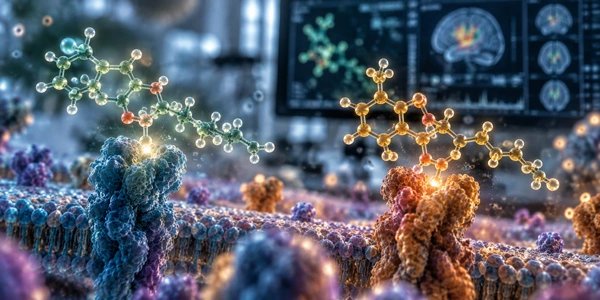
As we age, understanding how the body may respond differently to cannabinoids becomes increasingly important.
A 2025 review suggests that THC's effects may vary according to factors including dose and age, while also highlighting that there is still much for researchers to learn.⁶ Systematic reviews examining cannabinoid-based medicines in older adults similarly point to the importance of finding an appropriate balance between potential benefits, tolerability and individual response, particularly with THC-containing preparations.⁷˒⁸
Effects such as dizziness, sedation, cognitive changes and psychoactive effects may be more relevant as we get older, especially alongside age-related changes in balance, cardiovascular function or cognition. Older adults are also more likely to use several medicines at the same time (polypharmacy), making potential drug interactions another important consideration.
None of this means cannabinoids should automatically be ruled out as we age. Instead, it highlights the importance of making informed, individual choices. Understanding which cannabinoid and formulation you are using, considering the dose, and taking existing medications and health conditions into account can all help support more responsible decision-making. Where appropriate, guidance from a qualified healthcare professional can provide additional reassurance.
So, Can We Influence How We Age?
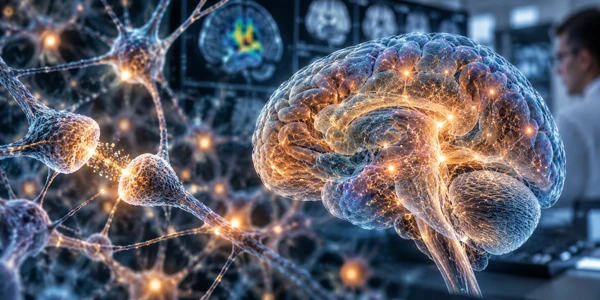
The encouraging message from modern ageing research is that ageing is not simply a fixed biological countdown. It is a dynamic process shaped by the ongoing interaction between our genetics, biology, environment and the experiences and exposures we accumulate throughout life.
Factors such as nutrition, movement, sleep, cardiovascular and metabolic health, social connection, smoking and alcohol use can all play a role in how we maintain health and function over time. There is no single habit, supplement or molecule that determines how well we age, rather, healthy ageing appears to be the result of many interconnected influences.
The endocannabinoid system (ECS) is emerging as one particularly interesting part of this bigger biological picture. Because cannabinoid signalling intersects with processes including inflammation, neurological function and cellular stress, researchers are continuing to explore how the ECS changes with age and what those changes might teach us about the biology of ageing.
Cannabis-derived compounds such as CBD and THC are also helping scientists investigate these pathways and may contribute to the identification of future therapeutic targets. This is an exciting area of research, but an important distinction remains, namely that cannabis has not been shown to stop or slow human ageing, and CBD and THC have not been proven to extend lifespan or healthspan.
That doesn't make the research any less valuable. In fact, the opportunity may lie not in finding a way to stop ageing, but in understanding it better.
Healthy-ageing science is increasingly focused on healthspan (the years of life spent healthy, functional and resilient) rather than lifespan alone. Understanding the biological systems that influence inflammation, brain function, cellular stress and resilience could ultimately help researchers build a clearer picture of what supports healthier ageing.
There is still much to discover, and the endocannabinoid system is becoming an intriguing part of that scientific conversation. Rather than offering a shortcut to longevity, cannabinoid research may help us understand one more piece of the remarkably complex puzzle of how our bodies change, adapt and function throughout life.
Quick Questions About Cannabis and Healthy Ageing
What is healthspan?
Healthspan generally refers to the period of life spent in good health and with meaningful physical and cognitive function, rather than simply the total number of years lived.
What happens to the body as we age?
Ageing involves interconnected cellular and physiological changes, including DNA damage, mitochondrial changes, cellular senescence, altered nutrient sensing, chronic inflammation, stem-cell exhaustion and changes to communication between cells.²
What is inflammaging?
Inflammaging describes persistent, low-grade inflammatory activity associated with ageing. Chronic inflammation is recognised as one of the biological hallmarks of ageing.²
Does the endocannabinoid system change with age?
Yes. Research indicates that components and activity of the endocannabinoid system can change during normal and pathological ageing, although the nature and significance of these changes remain active areas of research.³⁻⁵
Can CBD slow ageing?
There is currently insufficient clinical evidence to conclude that CBD slows biological ageing or extends lifespan in humans. Early and preclinical research has identified mechanisms worth investigating, but these should not be confused with proven anti-ageing effects.⁶
Can THC slow ageing?
There is no established clinical evidence that THC slows human ageing. Some preclinical research has produced interesting age and dose dependent findings, but considerably more human research is required.⁶
Is cannabis safe for older adults?
Not automatically. Individual health, medications, cannabinoid composition and dose all matter. THC-containing cannabinoid medicines in particular have been associated with increased adverse effects in studies involving older adults.⁷,⁸ Anyone considering cannabinoid products alongside medicines or existing health conditions should discuss this with an appropriately qualified healthcare professional.
Understanding CBD Product Formats
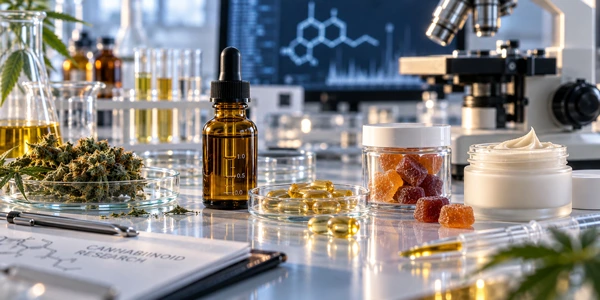
If this research has made you curious about CBD, a useful next step is understanding what different CBD products actually are and how their formats differ.
CBD is available in several forms, and the way a product is formulated can affect how it is used and how it fits into an individual's routine. Common formats include CBD oils, capsules, gummies and topical products, each with different characteristics and methods of use.
Cannamart offers a practical way to explore and compare these product formats, helping you better understand the choices available before deciding what may be appropriate for you.
Healthy ageing isn't about finding a single product, molecule or shortcut that promises more years, but rather about understanding our bodies better and making informed choices with the knowledge we have today, while staying curious about what science may reveal tomorrow. CBD and other cannabinoids are an intriguing part of that evolving story. Not because they offer a proven answer to ageing, but because they are helping us ask new questions about how the body changes, adapts and maintains balance throughout life. Perhaps the real opportunity isn't to stop the clock, but to keep learning how we can live well while it ticks.
Want to understand your options? Explore CBD product formats at Cannamart.
References
- World Health Organization. Healthy ageing and functional ability. Geneva: WHO; 2020.
- López-Otín C, Blasco MA, Partridge L, Serrano M, Kroemer G. Hallmarks of aging: an expanding universe. Cell. 2023;186(2):243–278. doi:10.1016/j.cell.2022.11.001.
- Paradisi A, Oddi S, Maccarrone M. The endocannabinoid system in ageing: a new target for drug development. Curr Drug Targets. 2006;7(11):1539–1552.
- Bilkei-Gorzo A. The endocannabinoid system in normal and pathological brain ageing. Philos Trans R Soc Lond B Biol Sci. 2012;367(1607):3326–3341. doi:10.1098/rstb.2011.0388.
- Fernández-Ruiz J, Sagredo O, Gómez-Ruiz M, de Lago E. Ageing, neurodegeneration and the endocannabinoid system. Curr Top Behav Neurosci. 2026;76:209–248. doi:10.1007/7854_2025_597.
- Nain S, Singh N, Schlag AK, Barnes M. The impact of cannabis use on ageing and longevity: a systematic review of research insights. J Cannabis Res. 2025;7:52. doi:10.1186/s42238-025-00267-x.
- Velayudhan L, McGoohan K, Bhattacharyya S. Safety and tolerability of natural and synthetic cannabinoids in adults aged over 50 years: a systematic review and meta-analysis. PLoS Med. 2021;18(3). doi:10.1371/journal.pmed.1003524.
- Pisani S, McGoohan K, Velayudhan L, Bhattacharyya S. Safety and tolerability of natural and synthetic cannabinoids in older adults: a systematic review and meta-analysis of open-label trials and observational studies. Drugs Aging. 2021;38(10):887–910. doi:10.1007/s40266-021-00882-2.
Disclaimer: This blog supports responsible cannabis use. The information contained in this article is for educational and informational purposes only and is not intended as health or medical advice. Always consult a physician or other qualified health provider regarding any questions you may have about a medical condition or health objectives.