Recovery has quietly become one of the most important frontiers in health and performance. We spend hours perfecting workouts, tracking nutrition, and chasing personal bests, yet the greatest physiological adaptations happen afterwards. While we rest, muscles repair, inflammation settles, the nervous system resets, and the body prepares for the next challenge.
Increasingly, researchers and wellness professionals are exploring recovery stacks. Combinations of supplements chosen because they support different biological processes rather than performing the same function. One combination attracting growing attention is CBD, magnesium, and reishi.
Each ingredient targets a different pillar of recovery. Individually, they show promise. Together, they form a complementary toolkit supported by a growing body of scientific evidence.
What Is a Recovery Stack?
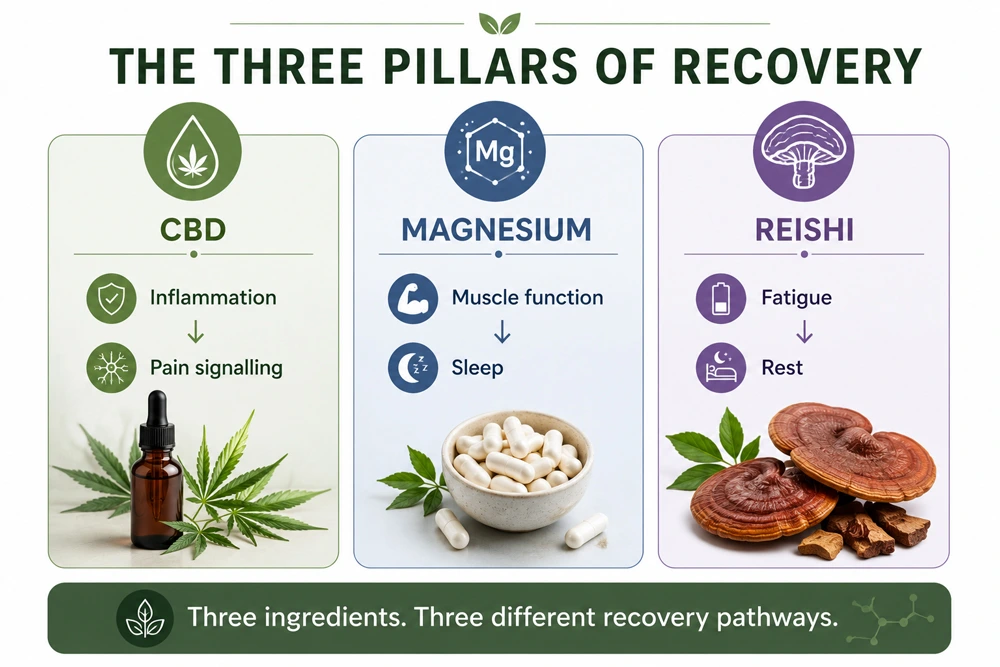
A recovery stack is simply a combination of supplements selected because they work through different mechanisms. Rather than relying on a single ingredient to do everything, the goal is to support several aspects of recovery simultaneously, including:
- inflammation
- muscle function
- nervous system recovery
- sleep quality
- fatigue management
This multi-target approach reflects the fact that recovery itself is a complex biological process involving the immune, muscular, endocrine and nervous systems.
CBD: Supporting the Inflammatory Response
Exercise, particularly unfamiliar or high-intensity training, creates microscopic damage within muscle fibres. This triggers inflammation, an essential part of tissue repair. However, excessive or prolonged inflammation may contribute to soreness and delay recovery.
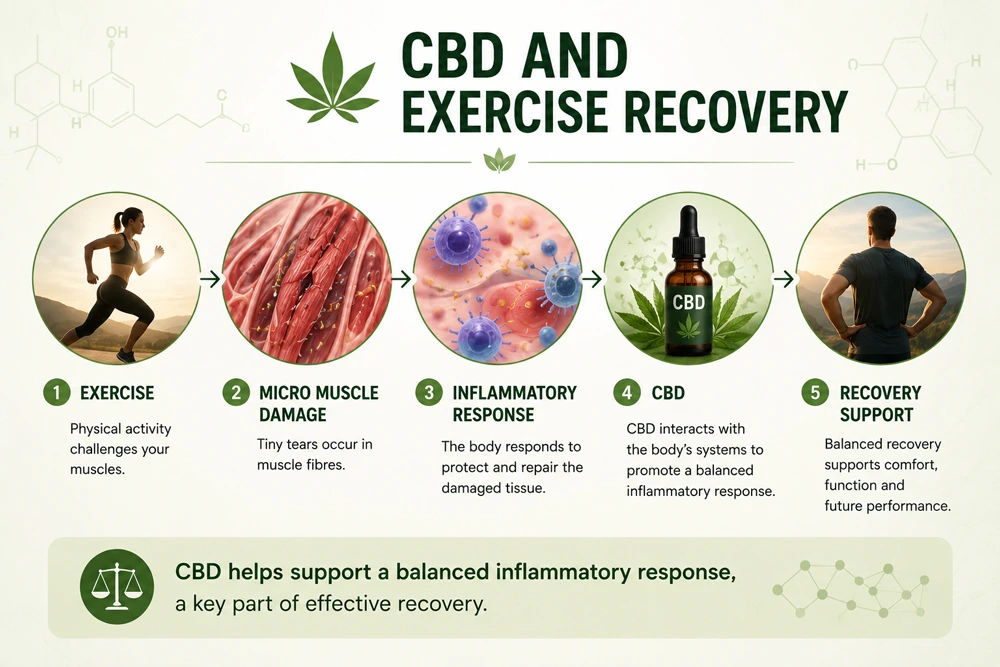
Cannabidiol (CBD) has attracted considerable research interest because it interacts with the body's endocannabinoid system (ECS), a network involved in regulating pain perception, immune function and maintaining physiological balance (homeostasis). Researchers are investigating whether these interactions may contribute to exercise recovery, although the exact mechanisms and clinical significance continue to be explored.
Human research is beginning to provide encouraging evidence. A 2026 randomised, placebo-controlled study found that participants receiving hemp-derived CBD experienced less pain, reduced strength loss and lower functional impairment following experimentally induced muscle injury compared with placebo, suggesting slightly faster recovery.¹
The picture is not entirely consistent, however. Other studies investigating topical CBD reported no significant improvements in delayed-onset muscle soreness (DOMS) or markers of muscle damage, particularly among untrained individuals.²˒³
Taken together, current evidence suggests CBD may provide supportive benefits for aspects of inflammation and exercise-related discomfort, although responses appear to vary between individuals and study designs.
Magnesium: The Foundation of Recovery
If CBD helps manage the inflammatory response, magnesium keeps many of the body's recovery systems functioning efficiently.
Magnesium participates in more than 300 enzymatic reactions involved in energy production, muscle contraction, protein synthesis and nervous system function.⁴ It also competes with calcium at muscle fibres, helping muscles relax after contraction.
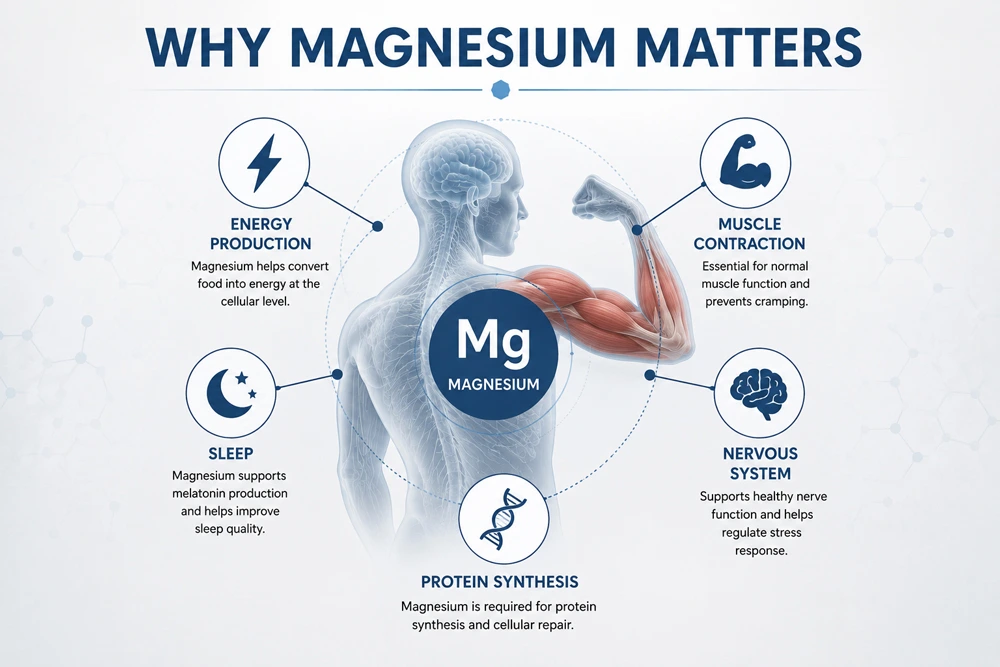
One of magnesium's greatest contributions to recovery may be its effects on sleep. Deep sleep is when growth hormone secretion increases, damaged tissues repair, and muscles rebuild.
A 2024 randomised controlled trial found that magnesium L-threonate significantly improved sleep quality, particularly deep and REM sleep, after only three weeks of supplementation.⁴ Systematic reviews similarly conclude that magnesium supplementation may improve sleep quality, especially in people who are deficient or have existing sleep difficulties, although benefits appear smaller in individuals with adequate magnesium intake.⁵˒⁶
Because inadequate magnesium intake is relatively common, particularly among physically active adults, maintaining sufficient magnesium levels represents a practical and evidence-informed component of recovery. Magnesium glycinate is frequently recommended for evening use because of its high bioavailability and association with the calming amino acid glycine.
Reishi: Supporting Fatigue and Restorative Sleep
Reishi (Ganoderma lucidum) has been valued in traditional Chinese medicine for centuries and is often described as an adaptogen, a botanical traditionally used to help the body adapt to physical and psychological stress. While the concept of adaptogens continues to be investigated scientifically, reishi contains polysaccharides and triterpenes that demonstrate antioxidant, immunomodulatory, and anti-inflammatory properties in laboratory research.⁷
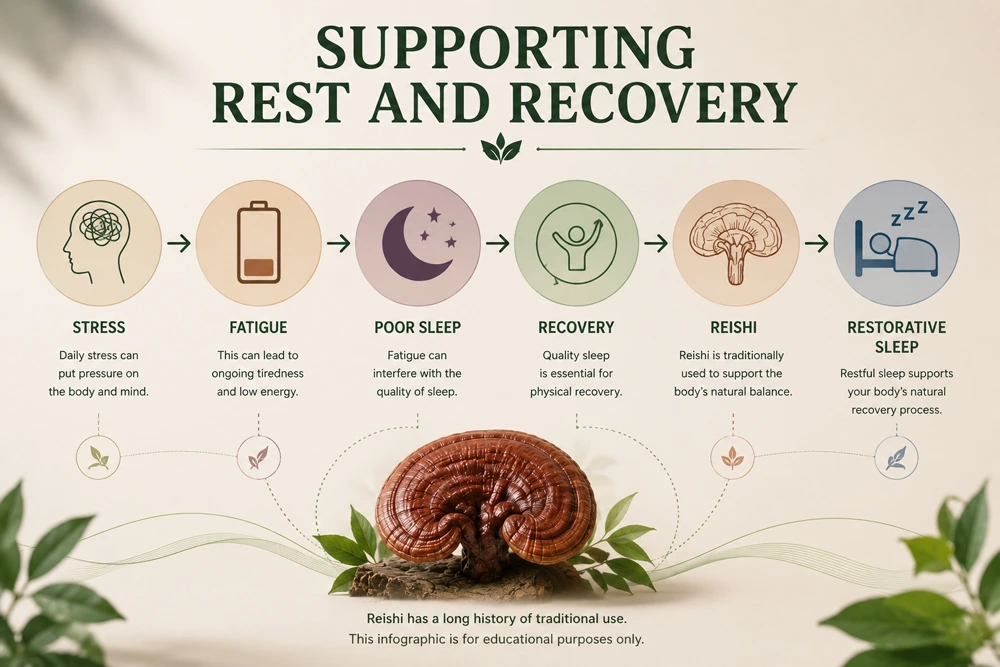
For recovery, two areas stand out: fatigue and sleep.
A double-blind, placebo-controlled clinical trial involving 132 participants with neurasthenia found that eight weeks of reishi polysaccharide supplementation reduced self-reported fatigue by nearly 30% while improving overall wellbeing.⁸
Emerging preclinical research also suggests reishi extracts may shorten the time needed to fall asleep and increase sleep duration, potentially through interactions with GABA signalling and the gut microbiome, although further human studies are needed.⁹
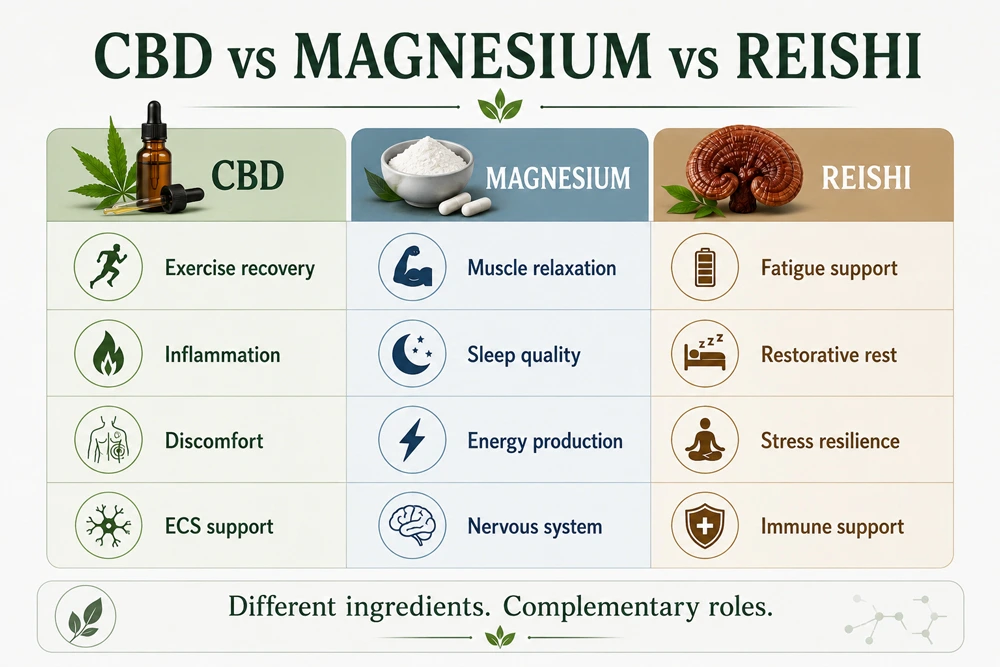
Rather than duplicating the actions of CBD or magnesium, reishi appears to complement them by supporting systemic recovery, stress resilience and restorative rest.
Why the Combination Makes Sense
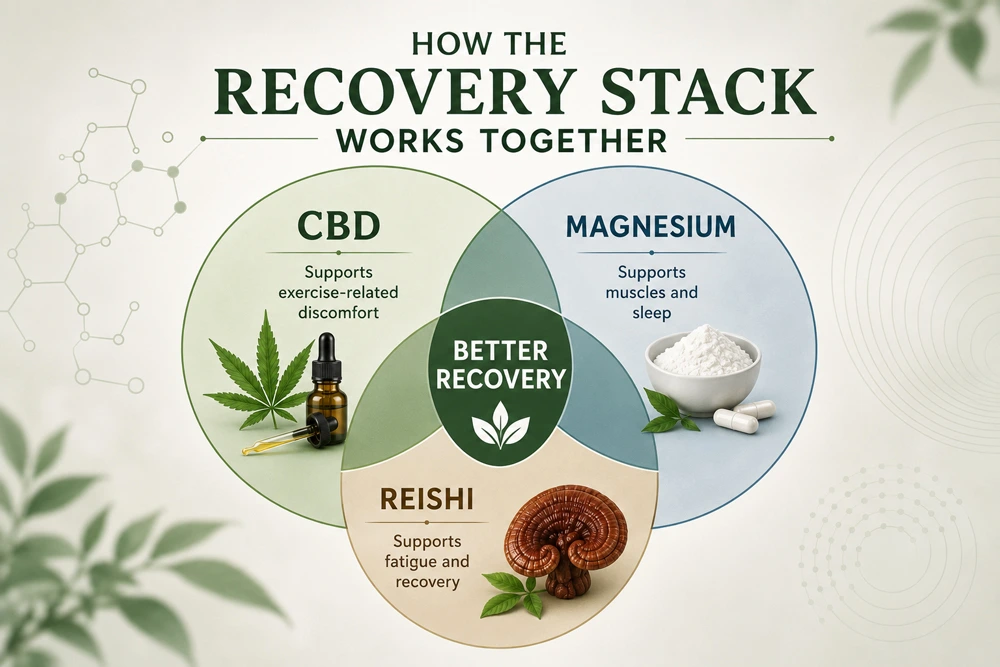
One of the strengths of this recovery stack is that each ingredient addresses a different aspect of the recovery process.
Layered together, they create a complementary strategy that may help calm inflammation, promote muscle relaxation, improve sleep quality and reduce fatigue. No single supplement accomplishes all of these tasks, which is why interest in combination approaches continues to grow.
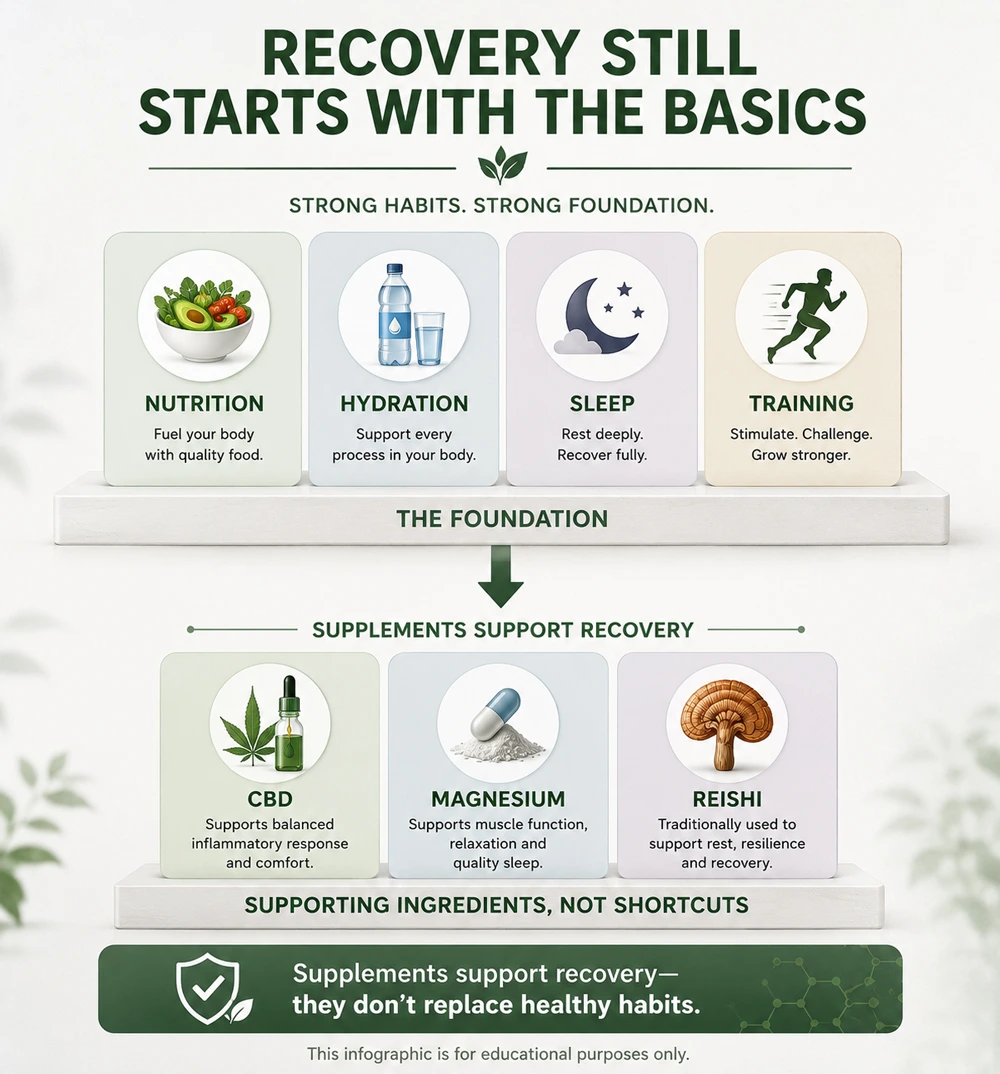
Importantly, supplements cannot replace the foundations of recovery. Adequate sleep, balanced nutrition, hydration and sensible training remain the cornerstones of long-term performance and wellbeing.
A Balanced Perspective
Although the evidence supporting CBD, magnesium and reishi continues to expand, important knowledge gaps remain. CBD research for exercise recovery is still relatively limited, while much of reishi's evidence comes from preclinical studies or traditional use.⁷⁻⁹ Magnesium shows the strongest evidence where deficiency exists, but responses vary between individuals.⁴⁻⁶
CBD may also interact with medications metabolised through liver enzymes, including certain blood thinners, anti-epileptic medicines and some antidepressants. Anyone with an underlying medical condition or taking prescription medication should consult a qualified healthcare professional before beginning supplementation.
When used thoughtfully as part of a broader recovery strategy, however, CBD, magnesium and reishi represent a scientifically plausible combination that supports multiple biological pathways involved in repair, adaptation and restorative sleep.
Conclusion
Recovery is rarely about finding one miracle ingredient. More often, it comes from combining good sleep, balanced nutrition, sensible training and evidence-informed supplements that support different aspects of the body's repair processes. CBD, magnesium and reishi each contribute in different ways, and while research continues to evolve, together they represent a thoughtful, science-informed approach to helping the body recover, adapt and prepare for the next challenge.
Frequently Asked Questions
What is a recovery stack?
A recovery stack is a combination of supplements chosen because they support different aspects of recovery, such as inflammation, muscle function, sleep, and fatigue.
Can CBD help with muscle recovery?
Early human studies suggest CBD may help reduce exercise-related discomfort and functional impairment following muscle injury, although results remain mixed and more research is needed.¹⁻³
Why is magnesium important for recovery?
Magnesium supports muscle function, energy production and nervous system health. It may also improve sleep quality, particularly in people with inadequate magnesium intake.⁴⁻⁶
What are the benefits of reishi?
Research suggests reishi may support fatigue management, immune function and restorative sleep, although much of the evidence remains preliminary.⁷⁻⁹
References
- Stauffer JW, Crow JA, Bishop MD, Cook RL, Borsa PA. Efficacy and safety of cannabidiol (CBD) on reducing pain and functional impairment associated with exercise-induced muscle injury: a randomised placebo-controlled feasibility trial. Journal of Cannabis Research. 2026.
- Isenmann E, Veehof J, Yavuz Y, et al. Topical application of cannabidiol for muscle recovery after exercise-induced muscle damage: a randomised, double-blinded pilot study. Journal of Cannabis Research. 2026.
- Stevens S, Hendrickson NR, et al. Topical cannabidiol and the progression rate of delayed onset muscle soreness. International Journal of Exercise Science.
- Hausen MA, et al. Magnesium L-threonate improves sleep quality and daytime functioning in adults with self-reported sleep problems: a randomised controlled trial. Sleep Medicine: X. 2024.
- Rawji A, Peltier MR, Mourtzanakis K, et al. Examining the effects of supplemental magnesium on self-reported anxiety and sleep quality: a systematic review. Cureus. 2024.
- Mah J, Pitre T. Oral magnesium supplementation for insomnia in older adults: a systematic review and meta-analysis. BMC Complementary Medicine and Therapies. 2021.
- Cör Andrejč D, Knez Ž, Knez Marevci M. Ganoderma lucidum—From ancient remedies to modern applications: chemistry, benefits, and safety. Molecules. 2024.
- Tang W, Gao Y, Chen G, et al. A randomised, double-blind and placebo-controlled study of a Ganoderma lucidum polysaccharide extract in neurasthenia. Journal of Medicinal Food. 2005.
- Yao C, et al. The anti-fatigue and sleep-aiding effects vary significantly among different recipes containing Ganoderma lucidum extracts. Heliyon. 2024.
Disclaimer: This blog supports responsible cannabis use. The information contained in this article is for educational and informational purposes only and is not intended as health or medical advice. Always consult a physician or other qualified health provider regarding any questions you may have about a medical condition or health objectives.