Quick Answer
Yes. Modern research suggests that the runner's high is influenced not only by endorphins but also by endocannabinoids. The body's own naturally produced cannabinoids. During moderate aerobic exercise, molecules such as anandamide increase in the bloodstream and activate the endocannabinoid system, which may contribute to improved mood, reduced anxiety, and decreased pain perception.¹
For decades, runners have described an almost magical feeling that arrives somewhere during a long run. Pain seems to fade, stress melts away, thoughts become clearer, and even difficult miles begin to feel effortless. Many athletes simply call it the runner's high.
For years, scientists believed this phenomenon was caused almost entirely by endorphins. The body's natural opioid-like chemicals. While endorphins undoubtedly play an important role, modern research paints a far more fascinating picture.
Today, evidence suggests that one of the biggest contributors to the runner's high may actually be your body's own cannabinoids.
What Causes a Runner's High?
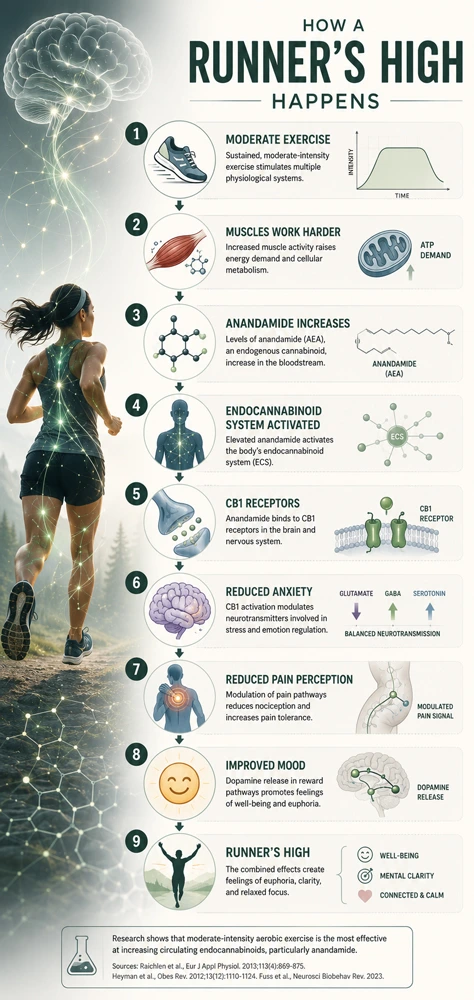
Research suggests a runner's high results from several biological changes occurring during sustained aerobic exercise, including:
- Increased production of endocannabinoids, especially anandamide
- Release of endorphins
- Reduced anxiety
- Altered pain perception
- Activation of the endocannabinoid system
- Moderate-intensity aerobic exercise
Scientists now believe endocannabinoids may play a particularly important role because they cross the blood-brain barrier far more easily than endorphins, allowing them to influence mood and brain function more directly.¹
Your Body Naturally Produces Cannabinoids
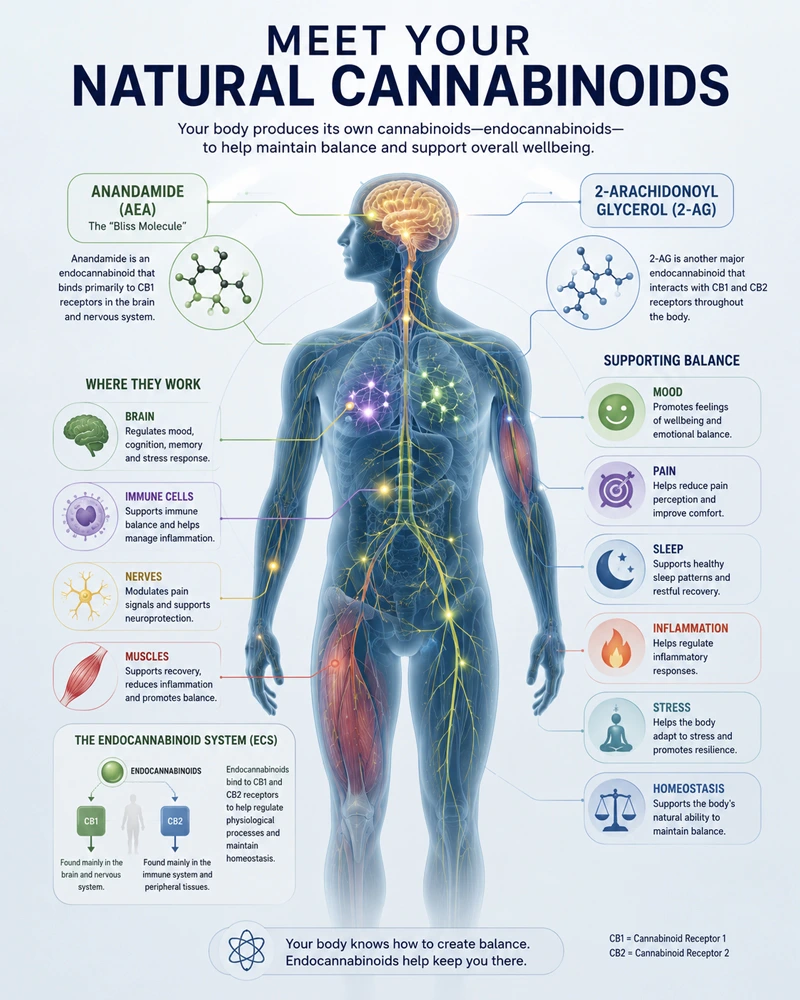
One of the most remarkable discoveries in neuroscience is that humans naturally produce compounds remarkably similar to cannabinoids found in the cannabis plant. These compounds are called endocannabinoids, meaning "cannabinoids produced within the body."
The two most studied are:
- Anandamide (AEA), often called the "bliss molecule"
- 2-Arachidonoylglycerol (2-AG)
Together they form part of the endocannabinoid system (ECS), one of the body's most important regulatory systems. The ECS helps maintain homeostasis, the body's natural internal balance, and influences numerous physiological processes, including:
- Mood
- Pain perception
- Inflammation
- Stress responses
- Memory
- Sleep
- Appetite
- Immune function
Unlike THC or CBD from the cannabis plant, endocannabinoids are produced naturally whenever the body requires them to help restore balance.²
Why Scientists Questioned the Endorphin Theory
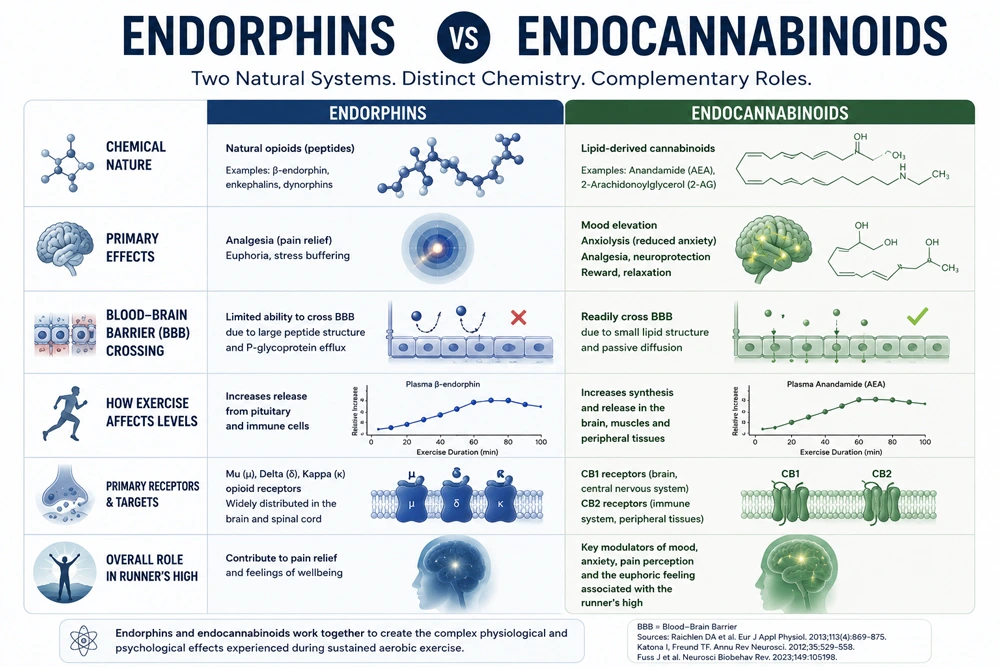
For decades, the runner's high was explained almost entirely by endorphins. Exercise certainly increases endorphin levels, and these natural opioid-like molecules help reduce pain. However, researchers recognised an important limitation.
Endorphins are relatively large molecules that struggle to cross the blood-brain barrier, making it difficult to explain the profound feelings of calmness, reduced anxiety and mild euphoria experienced by many runners.
Scientists began searching for another biological mechanism. That search led directly to the endocannabinoid system.
How the Endocannabinoid System Creates a Runner's High
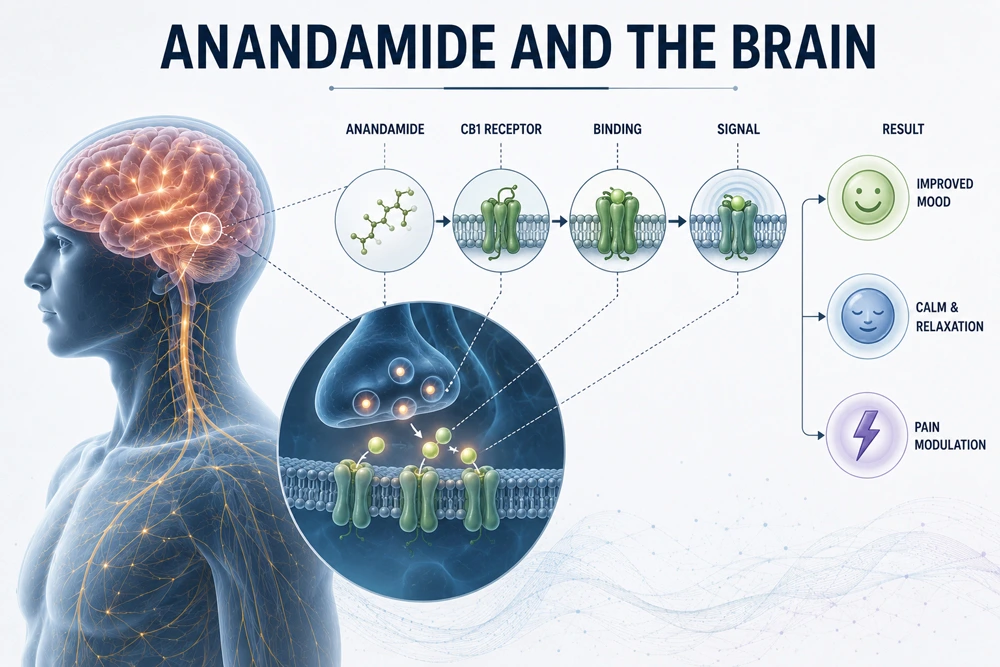
Unlike endorphins, anandamide crosses the blood-brain barrier with ease. Once released during exercise, it binds primarily to CB1 receptors located throughout the brain. Activation of these receptors has been associated with many of the sensations runners describe, including:
- Improved mood
- Reduced anxiety
- Reduced perception of pain
- Relaxation
- Increased motivation
- Feelings of wellbeing
Rather than causing intoxication, these naturally produced cannabinoids appear to fine-tune the brain's response to sustained aerobic exercise. This is one reason anandamide has earned its nickname: the bliss molecule.²
The Landmark Study That Changed the Conversation
One of the most influential human studies was published in the European Journal of Applied Physiology. Researchers measured circulating endocannabinoid levels in recreational runners before and after treadmill exercise performed at different intensities. Their findings were striking.
Moderate-intensity running produced significant increases in circulating endocannabinoids, whereas very light and very intense exercise generated much smaller changes.¹
This closely mirrors what runners have described for decades. The runner's high typically develops during sustained, moderate aerobic exercise. Not during an easy stroll or an all-out sprint.
Why Moderate Exercise Appears to Be the Sweet Spot
The findings from exercise studies suggest that intensity matters. Activities such as:
- Running
- Cycling
- Hiking
- Swimming
- Brisk walking
This appears capable of stimulating the endocannabinoid system when performed at moderate intensity for a sustained period. Researchers believe that extremely intense exercise may activate additional physiological stress responses that reduce the beneficial endocannabinoid effect.¹ While every individual responds differently, this may explain why many people finish a comfortable long run feeling energised, calmer and mentally refreshed.
Is Runner's High Really Caused by Cannabinoids?
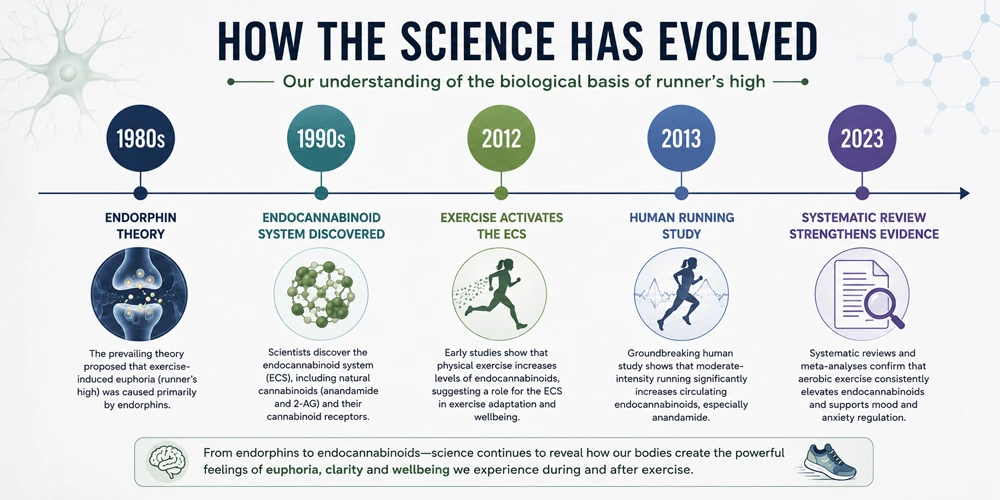
Current evidence suggests that both endorphins and endocannabinoids contribute to the runner's high. A comprehensive 2023 scientific review examined more than twenty human studies investigating exercise and endocannabinoids.
The researchers found:
- Most studies demonstrated increased endocannabinoid levels following aerobic exercise.
- Many reported improvements in mood alongside elevated anandamide concentrations.
- Several studies linked increased endocannabinoids with reduced anxiety.
- The overall evidence strongly supports an important role for the ECS, although researchers note that proving direct causation in humans remains challenging because of differences between study designs.³
In other words, the evidence continues to grow, but science is still refining exactly how the runner's high develops.
Why Exercise Activates the Endocannabinoid System
The discovery that exercise stimulates the ECS has changed how scientists think about physical activity. Exercise does far more than strengthen muscles and improve cardiovascular fitness. It also activates one of the body's most sophisticated regulatory systems.
The endocannabinoid system helps coordinate communication between the brain, nervous system, immune system and many other organs, helping maintain internal balance even during physical stress.² This may explain why regular exercise is associated not only with better physical health, but also with improved emotional wellbeing, resilience to stress and healthier sleep patterns.
What Runner's High Teaches Us About Cannabinoid Science
Perhaps the most fascinating lesson from runner's high research is that cannabinoids are not foreign substances introduced only through cannabis. Your body naturally produces cannabinoid molecules every single day. Understanding how exercise activates these molecules could help researchers develop new approaches to supporting pain management, mental wellbeing, stress resilience and neurological health.
It is important, however, to distinguish between endocannabinoids and plant-derived cannabinoids such as THC and CBD. Although they interact with some of the same cannabinoid receptors, they are different molecules and do not produce identical effects.
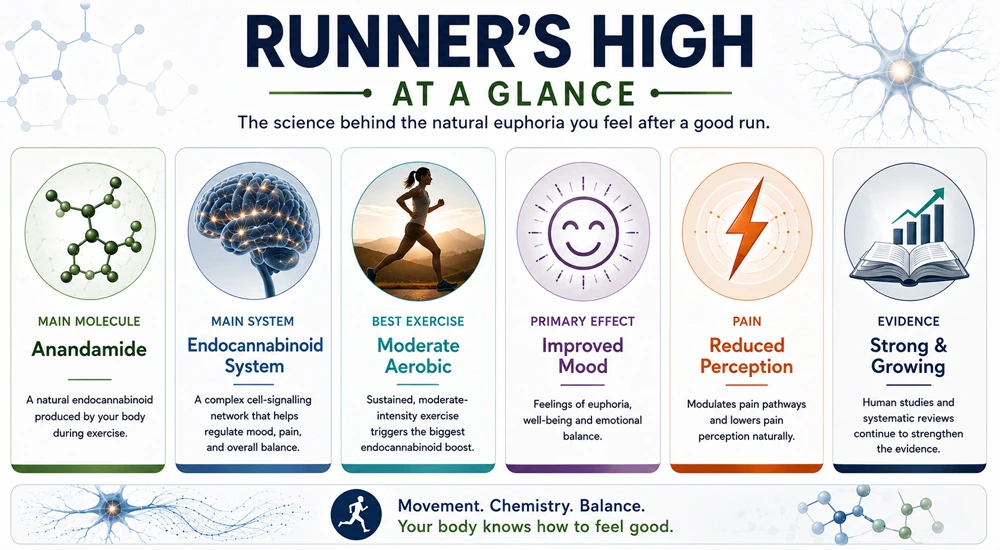
Runner's High at a Glance
Frequently Asked Questions
Is runner's high caused by endorphins or cannabinoids?
Current research suggests both contribute. Endorphins help reduce pain, while endocannabinoids such as anandamide appear to play a major role in improving mood because they readily cross the blood-brain barrier.
What is anandamide?
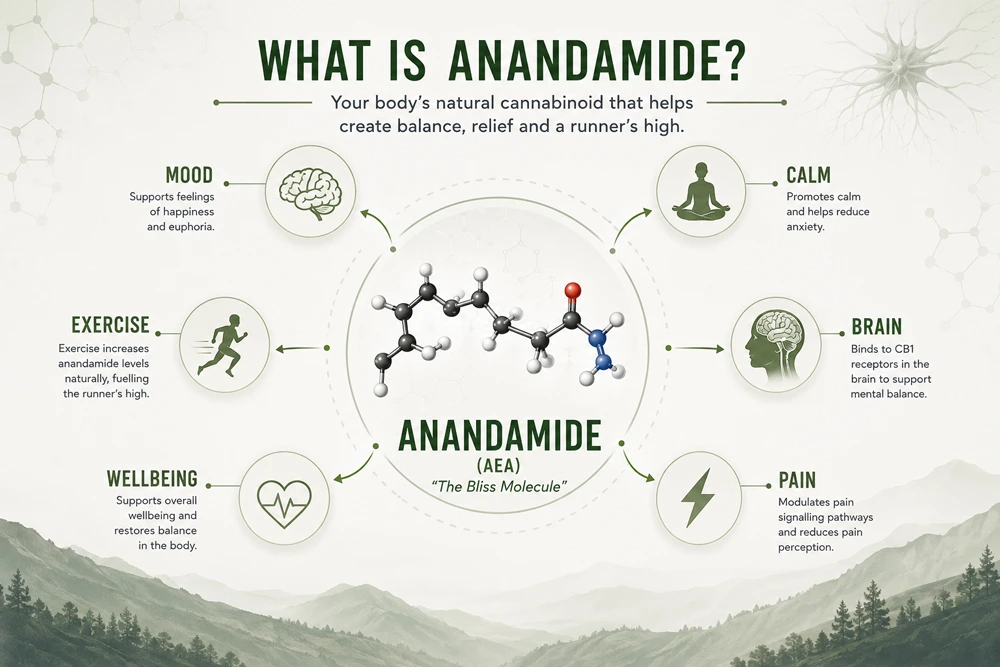
Anandamide is one of the body's naturally produced endocannabinoids. Sometimes called the "bliss molecule", it activates cannabinoid receptors involved in mood, reward and emotional wellbeing.
Does everyone experience a runner's high?
No. Genetics, exercise intensity, fitness level, duration of exercise and individual biology all influence whether someone experiences a noticeable runner's high.
Can walking produce a runner's high?
Brisk walking performed at moderate intensity may increase endocannabinoid levels, although the effect is generally stronger during sustained aerobic exercise such as running or cycling.
Is runner's high the same as using cannabis?
No. Runner's high is produced by the body's own endocannabinoids, whereas cannabis contains plant-derived cannabinoids such as THC and CBD. Although they interact with similar receptors, they are different compounds with different effects.
Explore related cannabinoid product categories on Cannamart to better understand the different formats available to consumers.
Final Thoughts
Every run is more than a workout. It is a conversation between your muscles, your brain and one of the body's most remarkable biological systems. While endorphins remain part of the story, modern research increasingly points to the endocannabinoid system as a key player in the calm, clarity and wellbeing many runners experience after sustained exercise.
The discovery that your body naturally produces cannabinoid molecules reminds us that the endocannabinoid system is not simply relevant to cannabis research. It is a fundamental component of human physiology.
As research continues to evolve, one thing is becoming increasingly clear: sometimes the most remarkable source of wellbeing isn't found outside the body.
It's already within you.

The science of the endocannabinoid system is evolving rapidly, revealing new insights into exercise, mood, pain, sleep and overall health. At Cannabis Oil Research, we translate the latest peer-reviewed research into clear, evidence-based blogs you can trust. Explore more blogs
References (Vancouver)
- Raichlen DA, Foster AD, Seillier A, Giuffrida A, Gerdeman GL. Exercise-induced endocannabinoid signalling is modulated by intensity. Eur J Appl Physiol. 2013.
- Katona I, Freund TF. Multiple functions of endocannabinoid signalling in the brain. Annu Rev Neurosci. 2012.
- Fuss J, Steinle J, Bindila L, et al. Do endocannabinoids cause the runner's high? Evidence and open questions. Neurosci Biobehav Rev. 2023.
- Heyman E, Gamelin FX, Aucouturier J, Di Marzo V. The role of the endocannabinoid system in skeletal muscle and metabolic adaptations to exercise. Obes Rev. 2012.
- Cannabis Oil Research. Runner's High May Result from Molecules Called Cannabinoids.
- News24. Runner's High May Result from Molecules Called Cannabinoids – Body's Own Version of THC and CBD.