Emotional Well-Being Begins in the Body
Emotional well-being is often discussed as a mindset, but in reality, it begins in the body. Our mood, capacity for love, and emotional resilience are shaped by how the nervous system responds to stress, safety, and connection.
When the nervous system is overwhelmed, emotions can feel intense, blunted, or difficult to regulate. When it feels supported, calm and emotional balance become more accessible. This is where growing interest in cannabis – particularly as a nervous system support tool – has emerged.
The Nervous System: The Body’s Emotional Regulator
The autonomic nervous system quietly governs how we respond to the world around us. Its two main branches – the sympathetic (fight-or-flight) and parasympathetic (rest-and-restore) systems –constantly shift in response to perceived threat or safety¹.
Ongoing stress, emotional strain, and modern overstimulation can keep the nervous system in a heightened state, contributing to anxiety, irritability, low mood, emotional fatigue, and difficulty feeling connected to others². Over time, this dysregulation can affect both mental and physical well-being.
The Endocannabinoid System and Emotional Balance
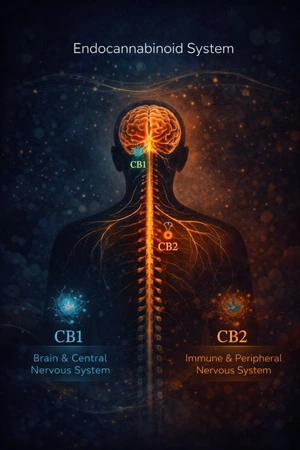
The endocannabinoid system (ECS) plays a key role in maintaining internal balance, or homeostasis. It helps regulate mood, stress response, emotional processing, and nervous system recovery through cannabinoid receptors distributed throughout the brain and body³.
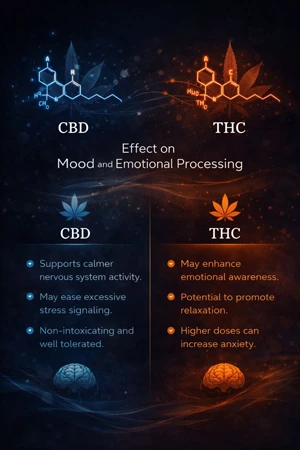
Cannabidiol (CBD) has been widely studied for its potential to support emotional regulation. Research suggests it may help reduce excessive stress signalling and support calmer nervous system activity, particularly in anxiety-related states⁴⁵. Importantly, CBD does not produce intoxicating effects, making it a gentler option for many individuals.
Tetrahydrocannabinol (THC) also interacts with emotional and sensory processing. At lower doses, it may enhance emotional awareness or relaxation, but higher doses – or individual sensitivity – can increase anxiety, reinforcing the importance of careful, personalised use⁶.
Love, Connection and Emotional Safety
Emotional connection and experiences of love rely on a sense of internal safety. When the nervous system feels regulated, it becomes easier to engage emotionally, communicate openly, and experience closeness.
Emerging research suggests that endocannabinoid signalling interacts with oxytocin pathways involved in bonding and social reward⁷. This interaction may help explain why some individuals report enhanced emotional openness or connection with cannabis use – particularly when it is approached intentionally and respectfully.
Used consciously, cannabis may form part of intentional rituals of connection, supporting shared moments of calm, presence, and emotional awareness rather than emotional avoidance.
Read more: How Cannabis Can Bring Us Closer: Healing, Connection and Community.

A Thoughtful, Individualised Approach
Cannabis is not a solution for emotional distress, nor should it replace emotional processing, therapy, or healthy coping strategies. Emotional balance is best supported through holistic approaches to balance, where nervous system care, lifestyle habits, and informed choices work together.
Read more: How Cannabis and Adaptogens Help You Thrive Naturally.
Every nervous system is different. What feels calming for one person may feel overstimulating for another. Factors such as cannabinoid profile, dose, timing, emotional state, and stress load all influence outcomes.
At Cannabis Oil Research, we advocate for informed, responsible use grounded in education, self-awareness, and scientific understanding. For many people, cannabis may form part of broader wellness goals and supportive cannabis use – helping the nervous system find steadiness rather than suppress emotion.
References
McEwen, B.S. (2007). Physiology and Neurobiology of Stress and Adaptation. Physiological Reviews.
Porges, S.W. (2011). The Polyvagal Theory. Norton & Company.
Hill, M.N. et al. (2010). The Endocannabinoid System and Stress Adaptation. Physiology & Behaviour.
Blessing, E.M. et al. (2015). Cannabidiol as a Potential Treatment for Anxiety Disorders. Neurotherapeutics.
Crippa, J.A.S. et al. (2011). Neural Basis of Anxiolytic Effects of Cannabidiol. Journal of Psychopharmacology.
Crippa, J.A.S. et al. (2009). Cannabis and Anxiety: A Critical Review. Human Psychopharmacology.
Wei, D. et al. (2015). Endocannabinoid Signalling Mediates Oxytocin-Driven Social Reward. PNAS.
Disclaimer: This blog supports responsible cannabis use. The information contained in this article is for educational and informational purposes only and is not intended as health or medical advice. Always consult a physician or other qualified health provider regarding any questions you may have about a medical condition or health objectives.