It rarely disappears with a dramatic announcement. For many women, libido simply becomes… quieter.
The spark that once arrived without much invitation suddenly needs a little more coaxing. Arousal may take longer. Sex may feel different. Or somewhere between disrupted sleep, changing hormones, work, relationships, ageing parents, teenagers, aching joints, and the general mental load of being a midlife woman, desire quietly wandered off without leaving a forwarding address.
If you're somewhere in the perimenopausal-to-postmenopausal stretch and wondering, "Where did my libido go?", you're certainly not the only one. Changes in sexual function, including desire, arousal, lubrication, orgasm, and satisfaction, are commonly reported during the menopause transition.¹˒²
But here's where things get interesting. Cannabis is increasingly appearing in conversations about female sexual wellbeing. Some women report greater desire, heightened sensation and more satisfying orgasms when using cannabis around sexual activity.
So, what does the research actually say, and perhaps more importantly: what doesn't it say yet?
Let's have the conversation properly.
What's actually happening down there?
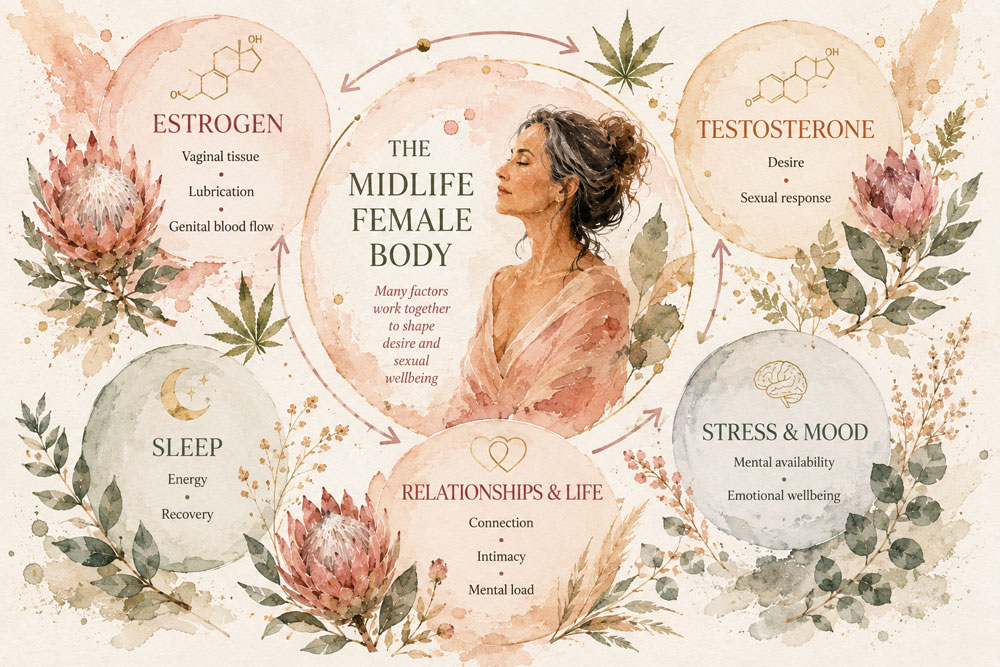
Midlife libido rarely has one villain. Instead, several physiological and life changes often arrive at roughly the same time.
During perimenopause, oestrogen levels fluctuate before eventually declining. Progesterone also changes, while testosterone, which plays a complex but recognised role in female sexual desire, gradually decreases with age.¹˒²
Lower oestrogen can affect vaginal and vulval tissue, lubrication and genital blood flow. For some women, this means arousal takes longer or penetrative sex becomes uncomfortable. And pain is not exactly famous for putting anyone in the mood. But hormones are only part of the picture. Sleep disturbance, stress, anxiety, low mood, medication, chronic pain, relationship dynamics, body image and the mental load of midlife can all influence sexual desire.
A systematic review examining sexual function after menopause found that both ageing and menopause-related factors can affect female sexual response.² Research has also found that testosterone therapy can improve certain measures of sexual function in appropriately selected postmenopausal women.³
In other words, libido is not simply an on/off hormonal switch. It's influenced by the whole woman.
Enter the endocannabinoid system
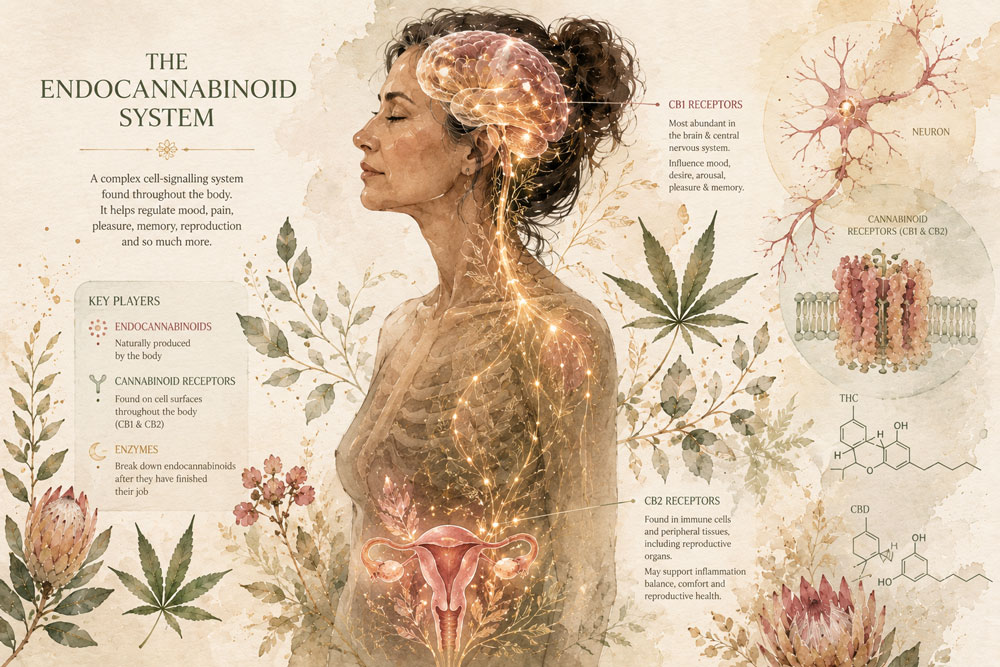
This is where cannabis becomes scientifically interesting. The human body has its own cannabinoid signalling network called the endocannabinoid system (ECS). It includes cannabinoid receptors, naturally occurring endocannabinoids and enzymes involved in producing and breaking those compounds down.
These signalling pathways are present throughout the nervous system and in areas relevant to reproductive and sexual physiology. Researchers have therefore been investigating whether cannabinoids could influence aspects of sexual response.⁷
That gives cannabis a biologically plausible connection to female sexuality, but biologically plausible does not automatically mean clinically proven, and that distinction matters.
Cannabis itself isn't one uniform substance either. Different products can contain very different concentrations and combinations of THC, CBD and other cannabinoids.
THC and CBD also behave differently in the body. So a study involving THC-containing cannabis cannot simply be translated into "CBD improves libido." The science isn't there yet.
So, what have studies on cannabis and sex actually found?
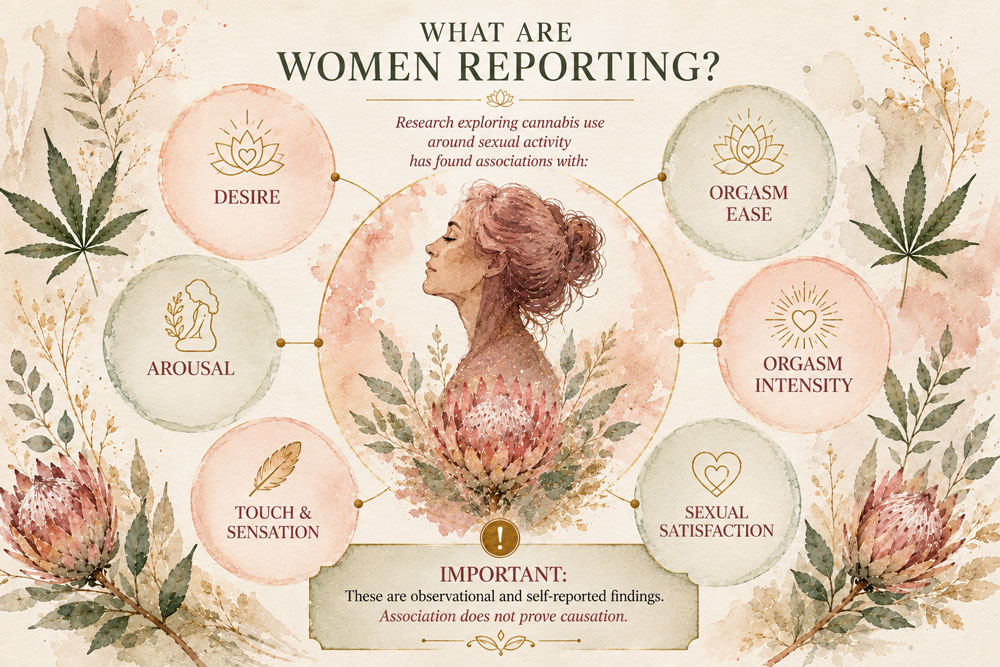
This is where the conversation becomes particularly intriguing. A 2019 study published in Sexual Medicine looked at women attending an academic obstetrics and gynaecology practice. Women who reported using cannabis before sex also reported improvements in areas including sexual drive, orgasm and overall sexual experience.⁴
Another study published in Sexual Medicine in 2020 used the validated Female Sexual Function Index to examine cannabis use and female sexual function. Among 452 women, greater frequency of cannabis use was associated with higher overall sexual-function scores.⁵
Then, in 2022, research published in the Journal of Cannabis Research found that many participants reported increased desire and orgasm intensity after cannabis use, as well as heightened sensory experiences such as touch.⁶
And orgasm is where the research becomes especially interesting.
A 2025 systematic review examining cannabis and female orgasmic function brought together evidence from almost 8,900 women. Across the available studies, researchers identified a relatively consistent self-reported and observational signal around orgasm ease, frequency and intensity.⁸
That's worth paying attention to, but there's an important catch.
Association isn't the same as causation
This may sound like the boring science paragraph, but it isn't, as it's probably the most important paragraph in the entire article. Most of the research we currently have on cannabis and female sexuality is observational or survey-based. That means researchers can identify an association, but they cannot necessarily prove that cannabis caused the change.
Women who choose to use cannabis before sex may differ from women who don't in numerous ways: age, relationships, sexual confidence, frequency of sexual activity, previous cannabis experience, baseline sexual function and attitudes towards cannabis.
Expectations matter too. If someone expects cannabis to make them feel more relaxed, sensual or connected to their body, that expectation may influence how they remember or describe the experience. None of this means women's reported experiences should be dismissed, actually quite the opposite. They give researchers valuable clues about what deserves further investigation. But a promising signal is not the same thing as a proven treatment.
That's where good cannabis education needs to hold both curiosity and evidence at the same time.
Does the amount of cannabis matter?
Possibly, and this is another fascinating part of the research.
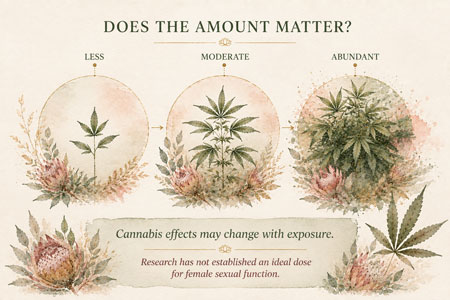
A review examining cannabinoids and female sexual function suggested that responses may differ depending on exposure, with lower amounts sometimes associated with different effects from higher amounts.⁷ That does not mean science has discovered a magic dose for better sex.
Individual responses to cannabis can vary considerably, and cannabinoid composition matters. Higher THC exposure can also produce unwanted effects such as anxiety, dizziness, impaired coordination, altered judgement or an uncomfortable psychoactive experience.
So while dose-response patterns are interesting to researchers, there is currently no clinically established cannabis dose for improving female sexual function. Sometimes cannabis research gives us an interesting answer, and sometimes it simply gives us a better question.
What about everything around sex?
Here's another reason the cannabis-and-libido conversation becomes complicated. Sometimes desire isn't the first thing that disappeared. Sleep did, or comfort, maybe it was calm, or it could be the ability to mentally switch off long enough to actually notice that someone is trying to seduce you.
Research tells us that women are already turning to cannabis during the menopause transition.
A 2022 survey published in Menopause found that among 258 perimenopausal and postmenopausal women, many reported using cannabis for menopause-related concerns, particularly sleep and mood.⁹
A larger Canadian survey published in BMJ Open in 2023 found cannabis use among women aged 35 and older was commonly associated with reasons including sleep, anxiety and joint discomfort.¹⁰
But we need to be careful about what those findings mean. A woman reporting that she uses cannabis for sleep doesn't automatically prove that cannabis successfully treats menopausal insomnia. And we can't create a neat chain that says:
cannabis → better sleep → less anxiety → better libido.
Human beings are wonderfully inconvenient like that.
What the research does tell us is that cannabis is already part of the way some women are navigating midlife wellbeing, and understanding that experience deserves proper scientific attention.
Cannabis, intimacy and a little common sense

Sexual wellbeing isn't just about blood flow, receptors and hormones. There are two people involved, and cannabis, particularly THC, can affect perception, coordination, attention and judgement.
Some people describe relaxation or heightened sensory awareness. Others experience anxiety, dizziness, sedation, paranoia or simply realise that cannabis and intimacy are not a combination they particularly enjoy.
Medication interactions also matter, especially during midlife when women may be taking medicines for other health concerns. And then there's something that should never disappear from a conversation about cannabis and sex: consent. Intoxication can affect communication and decision-making. Consent should always remain clear, voluntary and ongoing, regardless of whether cannabis or alcohol is involved. That's not the sexy part of the conversation, it is, however, an important one.
So… can cannabis bring your libido back?
We don't have enough evidence to say that, not yet. What we can say is that something interesting is happening in the research. Across several observational studies, women have reported associations between cannabis use and aspects of sexual experience including desire, sensation, satisfaction and, perhaps most consistently, orgasm.⁴⁻⁸
Researchers also have biologically plausible reasons to continue investigating the relationship between cannabinoids, the endocannabinoid system and female sexual response.⁷ But cannabis is not currently an established treatment for low libido, menopause-related sexual changes or female sexual dysfunction. And perhaps that isn't a disappointing conclusion.
For decades, women's midlife sexual health has been remarkably easy to dismiss as something we simply have to accept. The fact that researchers are now asking better questions, about hormones, sexual function, the endocannabinoid system and cannabis, is progress in itself. Your midlife body hasn't suddenly stopped being sexual. It may simply respond differently than it did at 25.

And understanding that body, without embarrassment, judgement or cannabis hype, gives us far more useful information than another miracle promise ever could. The science isn't finished, and neither are you.
Frequently Asked Questions
Can cannabis increase female libido?
Some observational studies have found associations between cannabis use and greater reported desire, arousal or sexual satisfaction in women.⁴⁻⁶ However, these studies cannot establish that cannabis itself caused the improvement, and further controlled research is needed.
Does cannabis affect orgasm in women?
This is one of the more interesting areas of current research. Several studies have found associations between cannabis use and self-reported changes in orgasm ease, frequency or intensity.⁴˒⁶˒⁸ A 2025 systematic review identified a promising observational signal, but this should not yet be interpreted as evidence that cannabis treats orgasmic difficulties.⁸
Why can libido decrease during perimenopause and menopause?
Hormonal changes can affect vaginal tissue, lubrication, genital blood flow and sexual response.¹˒² Sleep disturbance, stress, mood, pain, medications, relationships and overall health can also influence sexual desire.
Can cannabis help with low libido during menopause?
There is currently insufficient clinical evidence to conclude that cannabis treats menopause-related low libido. Research suggests interesting associations between cannabis and some aspects of female sexual function, but controlled studies specifically examining menopausal women are still needed.
Is CBD the same as cannabis when we're talking about libido?
No. Cannabis may contain THC, CBD and numerous other cannabinoids. THC and CBD have different pharmacological effects, so research involving cannabis or THC-containing products cannot automatically be applied to CBD.
Related Consumer Resources
Curious about cannabis but confused by the difference between oils, capsules, gummies and other cannabinoid formats? Cannamart brings together products from different suppliers and formats, making it easier to explore the wider cannabis landscape and make more informed choices.
References
- Ohio State Health & Discovery. How menopause impacts your sex drive. 2025.
- Sexual Function and Factors Affecting Menopause: A Systematic Review. Journal of Menopausal Medicine. 2019.
- Davis SR et al. Testosterone for women: a systematic review and meta-analysis of randomised controlled trial data. The Lancet Diabetes & Endocrinology. 2019.
- Lynn BK et al. The Relationship between Marijuana Use Prior to Sex and Sexual Function in Women. Sexual Medicine. 2019.
- Kasman AM et al. Assessment of the Association of Cannabis on Female Sexual Function With the Female Sexual Function Index. Sexual Medicine. 2020.
- The influence of cannabis on sexual functioning and satisfaction. Journal of Cannabis Research. 2022.
- Effects of Cannabinoids on Female Sexual Function. Sexual Medicine Reviews. 2019.
- Cannabis for female orgasmic disorder/difficulty: a systematic review. Sexual Medicine. 2025.
- A survey of medical cannabis use during peri-menopause and post-menopause. Menopause. 2022.
- Ross S, Yuksel N et al. Cannabis use for menopause in women aged 35 and over. BMJ Open. 2023.
Disclaimer: This blog supports responsible cannabis use. The information contained in this article is for educational and informational purposes only and is not intended as health or medical advice. Always consult a physician or other qualified health provider regarding any questions you may have about a medical condition or health objectives.