In the world of mushrooms, few species have attracted as much scientific attention as Turkey Tail (Trametes versicolor). Named for its colourful fan-shaped appearance resembling a wild turkey's tail feathers, this mushroom has been used in traditional wellness practices for centuries.
Today, Turkey Tail is often promoted as an immune-support supplement. While some marketing claims can be exaggerated, the scientific evidence surrounding this mushroom is surprisingly robust compared to many other natural wellness products.
The key question is not whether Turkey Tail is a miracle cure. It isn't. The real question is whether it can support healthy immune function as part of a broader wellness approach.
The current research suggests that it may.
What Makes Turkey Tail Unique?
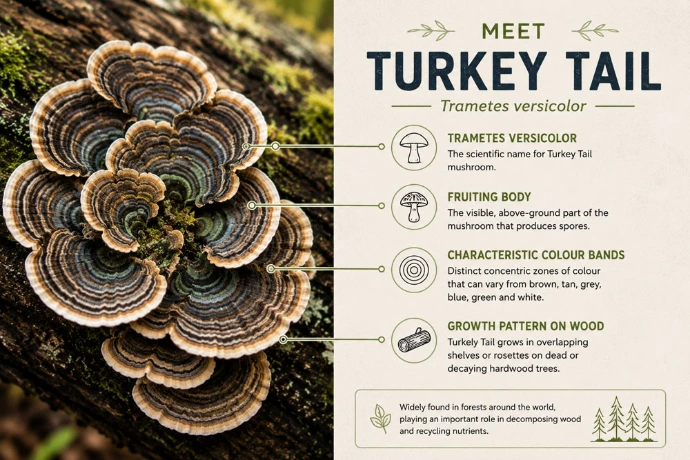
Turkey Tail contains several biologically active compounds, particularly polysaccharopeptides (PSP) and polysaccharide-K (PSK). These compounds have been the focus of extensive scientific investigation due to their effects on immune system activity.¹
Rather than directly attacking disease, these compounds appear to influence how the body's immune cells communicate and respond to challenges. Researchers refer to this as immunomodulation. Helping the immune system maintain balance rather than simply stimulating it indiscriminately.²
This distinction is important because a healthy immune system is not necessarily an overactive one.
How Consumers Typically Use Turkey Tail
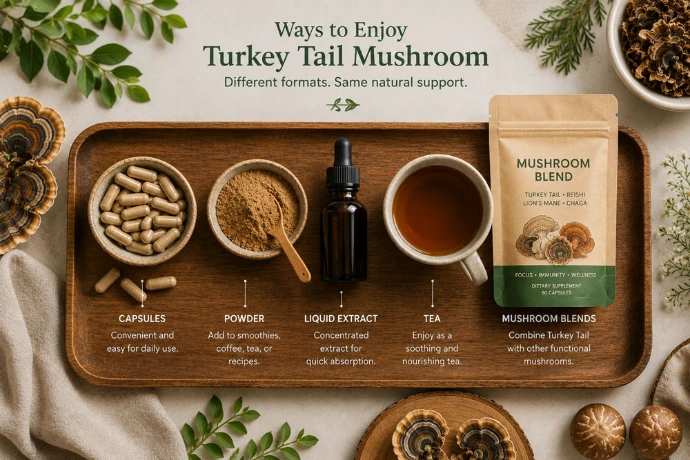
Turkey Tail is available in several different formats, each offering a slightly different user experience.
Common options include:
- Capsules: Convenient and easy to incorporate into daily routines.
- Powders: Often added to smoothies, coffee, tea, or wellness beverages.
- Liquid Extracts and Tinctures: Concentrated preparations designed for rapid absorption.
- Functional Mushroom Blends: Products that combine Turkey Tail with other mushrooms such as Lion's Mane, Reishi, Chaga, or Cordyceps.
While the format may differ, consumers should remember that product quality often matters more than the delivery method itself.
Current research has not established one universally superior format, but many experts recommend choosing products that clearly disclose their mushroom source, extraction methods, and active compound content.
The Gut-Immune Connection
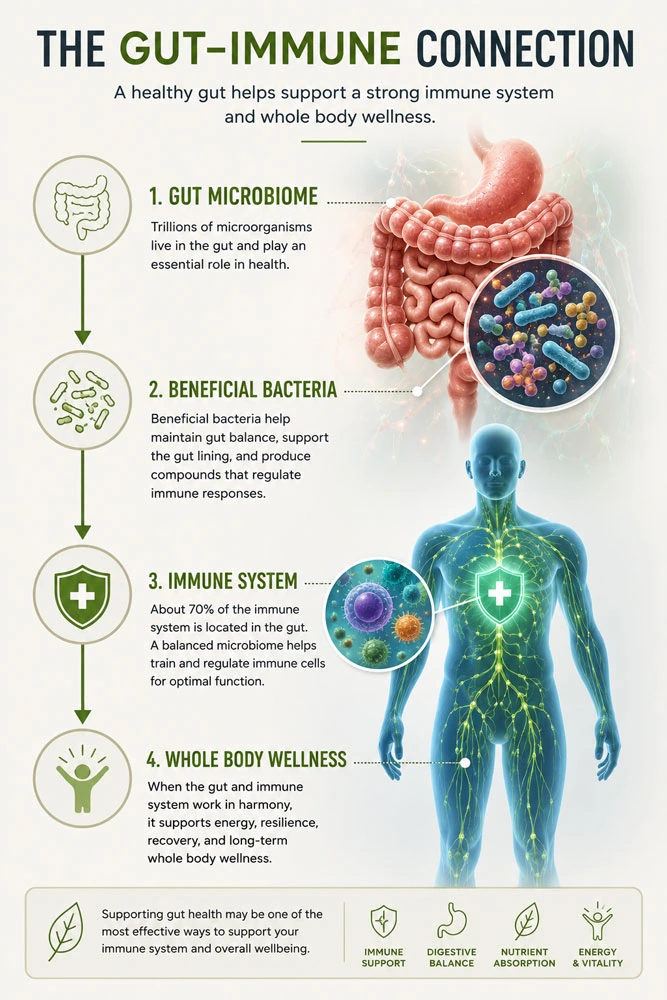
One of the most interesting areas of Turkey Tail research involves the gut microbiome.
Approximately 70% of the immune system is associated with the gastrointestinal tract. The microorganisms living within the gut play a critical role in regulating immune responses throughout the body.³
Turkey Tail contains prebiotic fibres that may help nourish beneficial gut bacteria. Studies have shown that these compounds can support microbial diversity and encourage the growth of bacteria associated with healthy immune function.⁴
This suggests that some of Turkey Tail's immune-supportive effects may occur indirectly through its influence on gut health.
What Does the Clinical Research Show?
Turkey Tail has been studied extensively, particularly in Asia, where extracts such as PSK have been incorporated into conventional healthcare settings for decades.
Research has demonstrated that Turkey Tail-derived compounds can influence natural killer cells, T-cells, dendritic cells, and other important components of immune function.²
Several clinical studies have also investigated Turkey Tail extracts alongside conventional cancer treatment protocols. While these studies do not suggest that Turkey Tail cures cancer, some findings indicate potential benefits in supporting immune recovery and overall quality of life during treatment.⁵
Importantly, most researchers agree that more large-scale, high-quality clinical trials are still needed to fully understand the extent of these effects.
What Turkey Tail Is Not
In the wellness space, it is easy for promising research to become inflated into unrealistic claims. Turkey Tail is not a substitute for medical treatment. It is not a guaranteed solution for infections, chronic illness, or immune disorders, nor is it a product that can "boost" the immune system indefinitely. Instead, the evidence points toward Turkey Tail being a potentially useful tool that may support healthy immune regulation when used appropriately as part of a balanced lifestyle.
Choosing Quality Turkey Tail Products
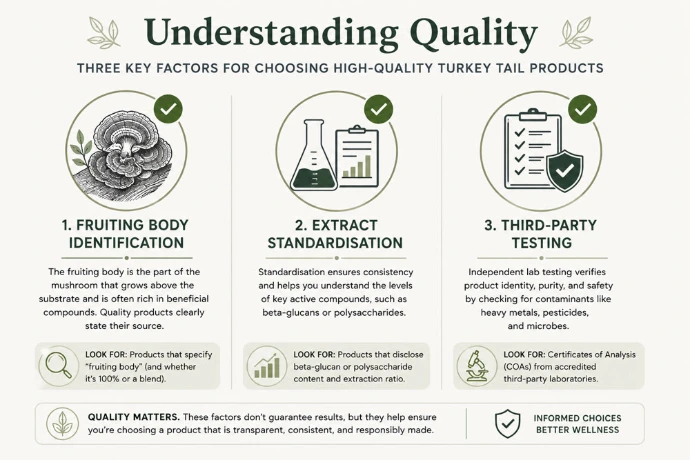
As interest in functional mushrooms continues to grow, product quality has become an increasingly important consideration.
Consumers may encounter terms such as:
Fruiting Body vs Mycelium
The fruiting body is the visible mushroom that grows above the substrate, while mycelium refers to the underground root-like network. Both contain beneficial compounds, but concentrations can vary depending on cultivation and processing methods. Some experts prefer products that clearly identify whether they contain fruiting body, mycelium, or a combination of both.
Extract Standardisation
Many high-quality Turkey Tail products provide information about their levels of beta-glucans or other active compounds. Standardisation helps consumers better understand what is contained in a supplement and supports consistency between batches.
Third-Party Testing
Independent laboratory testing can help verify product identity, purity, and safety. This may be particularly important for consumers seeking reassurance regarding contaminants such as heavy metals or microbial impurities. While these factors do not guarantee effectiveness, they can help consumers make more informed purchasing decisions.
A Balanced Perspective

The growing interest in mushrooms reflects a broader shift toward understanding health as an interconnected system involving the immune system, microbiome, nervous system, nutrition, movement, and recovery.
Turkey Tail fits into this evolving picture not because it offers quick fixes, but because it highlights the remarkable relationship between natural compounds and human biology.
For individuals exploring functional mushrooms, the most responsible approach is one grounded in curiosity, evidence, and realistic expectations.
As research into mushrooms continues to evolve, Turkey Tail remains one of the most extensively studied species in the field of functional wellness. While it should not be viewed as a cure or replacement for medical care, current evidence suggests it may play a supportive role in immune regulation, gut health, and overall wellbeing. For consumers interested in functional mushrooms, the most effective approach remains the same: choose quality products, stay informed, and let evidence guide expectations.
Frequently Asked Questions About Turkey Tail Mushroom
- What is Turkey Tail mushroom? Turkey Tail (Trametes versicolor) is a mushroom containing compounds such as polysaccharopeptides (PSP) and polysaccharide-K (PSK) that have been studied for their effects on immune function and gut health.
- Does Turkey Tail mushroom boost the immune system? Current research suggests Turkey Tail may help support healthy immune regulation rather than simply "boosting" immunity. Scientists often describe this effect as immunomodulation.
- Is Turkey Tail good for gut health? Turkey Tail contains prebiotic compounds that may support beneficial gut bacteria. Since the gut microbiome plays an important role in immune function, researchers are investigating this connection closely.
- What is the best way to take Turkey Tail mushroom? Turkey Tail is commonly available as capsules, powders, liquid extracts, and functional mushroom blends. There is currently no universally accepted "best" format, making product quality and transparency more important considerations.
- Are Turkey Tail supplements safe? Turkey Tail is generally well tolerated by most healthy adults. However, individuals with medical conditions, those taking medication, or anyone undergoing medical treatment should consult a qualified healthcare professional before using supplements.
References
- Cui J, Chisti Y. Polysaccharopeptides of Coriolus versicolor: Physiological activity, uses, and production. Biotechnology Advances. 2003;21(2):109-122.
- Kidd PM. The use of mushroom glucans and proteoglycans in cancer treatment. Alternative Medicine Review. 2000;5(1):4-27.
- Belkaid Y, Hand TW. Role of the microbiota in immunity and inflammation. Cell. 2014;157(1):121-141.
- Pallav K, Dowd SE, Villafuerte J, et al. Effects of polysaccharopeptide from Trametes versicolor on human fecal microbiota. Journal of Integrative Medicine. 2014;12(3):244-249.
- Eliza WL, Fai CK, Chung LP. Efficacy of Yun Zhi (Coriolus versicolor) on survival in cancer patients: Systematic review and meta-analysis. Recent Patents on Inflammation & Allergy Drug Discovery. 2012;6(1):78-87.
- Hobbs C. Medicinal Mushrooms: An Exploration of Tradition, Healing and Culture. HerbalGram. 2021.
- Wasser SP. Current Findings, Future Trends, and Unsolved Problems in Studies of Medicinal Mushrooms. Applied Microbiology and Biotechnology. 2022;106:5531–5548.
Disclaimer: This blog supports responsible cannabis use. The information contained in this article is for educational and informational purposes only and is not intended as health or medical advice. Always consult a physician or other qualified health provider regarding any questions you may have about a medical condition or health objectives.