CBD is often described as “anti-inflammatory”, but when it comes to inflammation and cardiovascular health, the science is considerably more complicated.
Inflammation has become one of the biggest talking points in health and wellness. It is also increasingly part of the conversation around cannabis, particularly cannabidiol (CBD), which is frequently associated with “anti-inflammatory” effects.
But there is an important gap between biological potential and proven benefit in people.
This becomes especially important when we talk about the heart. Chronic low-grade inflammation is involved in cardiovascular ageing and atherosclerosis, while cannabis and cannabinoids can also affect the cardiovascular and immune systems in different ways.
So, what do we actually know about cannabinoids, inflammation and cardiovascular health, and where does the evidence stop?
Do cannabinoids reduce inflammation?
The short answer: cannabinoids can interact with inflammatory and immune pathways, but current human evidence does not show that CBD or cannabis consistently reduces chronic inflammation or prevents cardiovascular disease.
Laboratory and animal research has identified potentially important effects, but human studies remain mixed. Recent systematic reviews suggest that cannabinoid effects on inflammatory biomarkers may be small, inconsistent or involve both pro- and anti-inflammatory responses.¹⁰˒¹¹
That makes describing CBD simply as “anti-inflammatory” an oversimplification of the evidence.
What Is Inflammaging and Why Does It Matter?
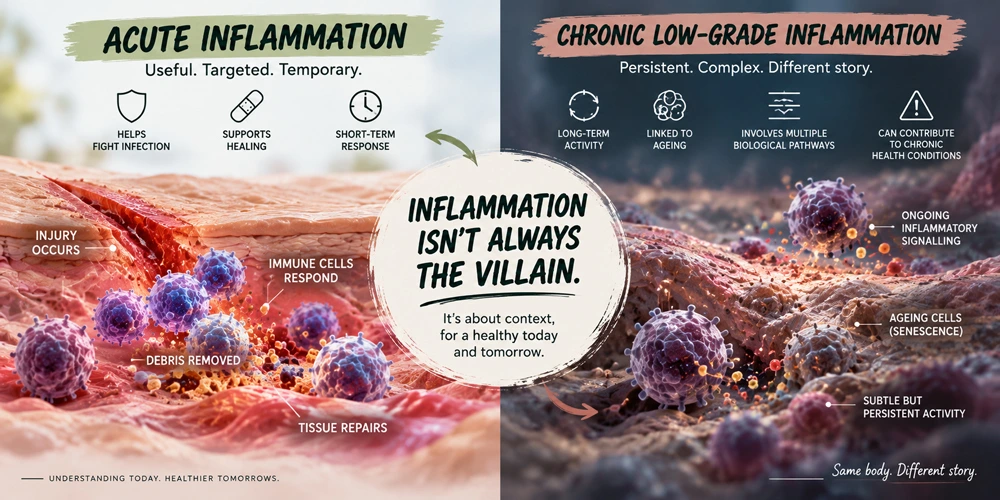
Inflammation itself isn't inherently harmful. Acute inflammation is an essential part of the body's response to infection and injury.
The concern is chronic, low-grade inflammation.
As we age, baseline inflammatory activity tends to increase. Researchers sometimes call this inflammaging.¹˒⁴ It has been associated with cellular senescence, changes in immune function, oxidative stress and other biological processes involved in ageing.⁴⁻⁶
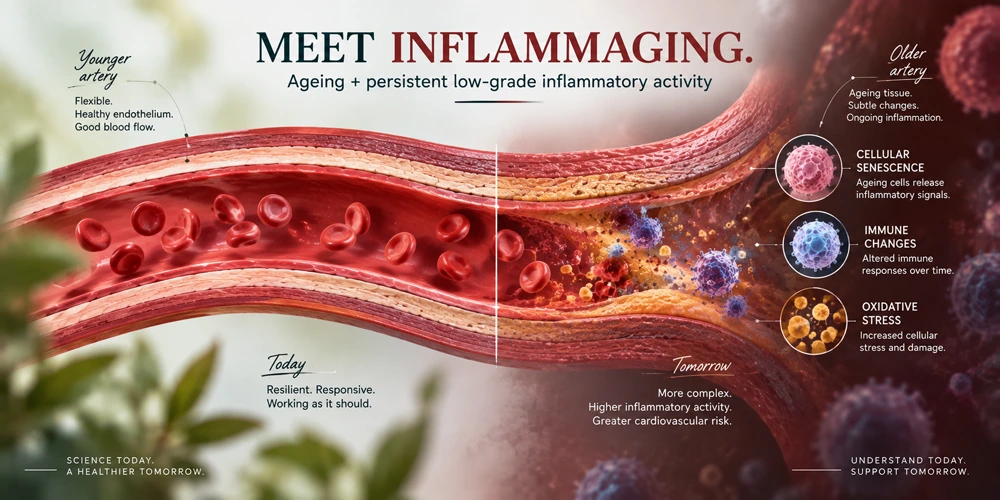
This matters to cardiovascular health because atherosclerosis is not simply cholesterol accumulating inside an artery. It is also an inflammatory process.
Inflammatory signalling contributes to changes within blood vessel walls and the development and instability of atherosclerotic plaques.¹˒⁴
The role of inflammation in cardiovascular disease is therefore well established. The more difficult question for cannabis research is whether cannabinoids meaningfully influence those processes in humans.
Why Are Cannabinoids Being Studied for Inflammation?
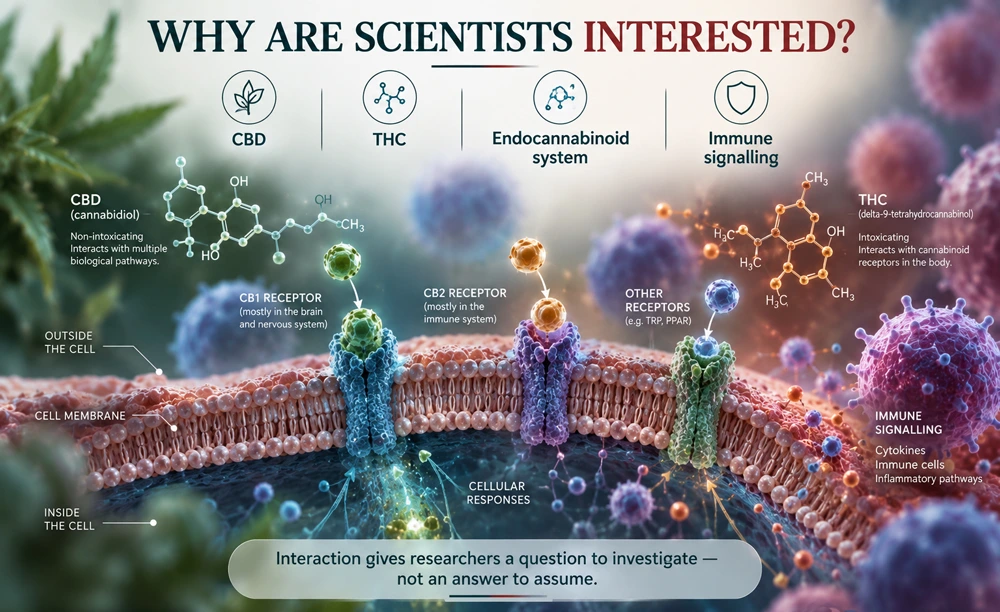
Cannabis contains numerous biologically active compounds, including the two best-known cannabinoids: delta-9-tetrahydrocannabinol (THC) and cannabidiol (CBD).
They do not have identical effects.
THC is primarily responsible for cannabis's intoxicating effects and can influence heart rate, blood pressure and other cardiovascular functions. CBD is non-intoxicating and interacts with multiple biological pathways, which has led researchers to investigate its possible immunomodulatory and inflammatory effects.⁷
Much of the scientific interest also comes from the body's own endocannabinoid system, a signalling network involved in processes including immune regulation.
Laboratory and animal research has consequently produced intriguing evidence that cannabinoids can interact with inflammatory pathways.
But intriguing mechanisms are not the same thing as demonstrated clinical outcomes.
Is CBD Really Anti-Inflammatory?

This is where the evidence becomes particularly interesting.
Individual human studies have produced signals worth investigating. A small pilot trial involving ten healthy adults, for example, found changes in an inflammatory marker following a single 30 mg CBD exposure.⁸ Another randomised study involving people with cocaine use disorder reported differences in several inflammatory markers, including IL-6, among participants receiving CBD.⁹
Neither study demonstrates that CBD prevents cardiovascular disease or treats chronic systemic inflammation in the general population.
More importantly, larger reviews of the evidence paint a much less straightforward picture.
A 2025 systematic review and meta-analysis examining CBD and THC found that effects on circulating inflammatory biomarkers were generally inconsistent, small and imprecise.¹⁰
A larger 2026 systematic review examined 46 studies involving more than 54,000 participants. Rather than finding a simple anti-inflammatory effect, researchers observed evidence of both pro-inflammatory and anti-inflammatory modulation. Randomised CBD trials did not demonstrate a consistent reduction in inflammatory biomarkers.¹¹
That distinction matters.
Calling CBD simply “anti-inflammatory” can make the science sound far more settled than it currently is. A better description based on present evidence is that cannabinoids appear capable of modulating immune and inflammatory processes, but we do not yet fully understand when, how or whether those changes translate into meaningful health benefits.
What Does Research Say About CBD and Heart Health?

There are early human studies investigating CBD's cardiovascular effects.
A small 2017 randomised crossover study involving nine healthy men found that a single 600 mg dose of CBD reduced resting blood pressure and affected cardiovascular responses to stress.¹²
Interesting? Absolutely. Proof that CBD lowers blood pressure or protects the cardiovascular system? No.
A small experimental study in healthy volunteers cannot establish long-term cardiovascular benefit, determine effects in people with cardiovascular disease or tell us whether ordinary consumer CBD products produce comparable effects.
This distinction between an interesting physiological finding and a clinically proven benefit is essential when interpreting cannabinoid research.
Does Cannabis Affect Cardiovascular Health?
Cannabis is not cardiovascularly neutral.
The American Heart Association has noted that cannabis has few established cardiovascular therapeutic benefits and that there are important cardiovascular concerns associated with its use. THC and CBD also have different pharmacological effects, meaning findings about one cannabinoid cannot automatically be applied to cannabis as a whole.⁷
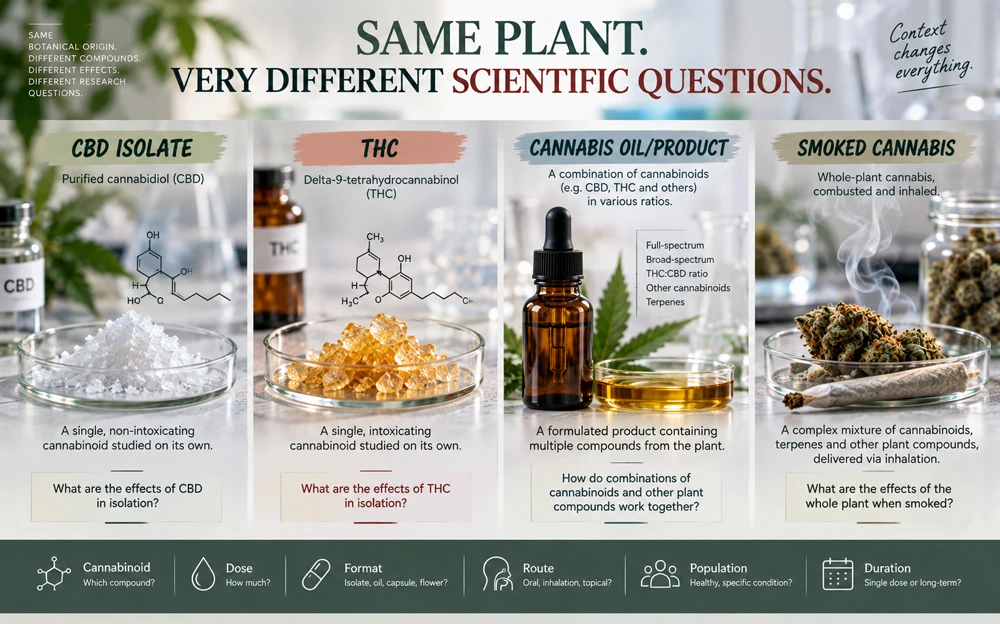
How cannabis is consumed matters too. Smoking cannabis introduces combustion products and should not be interpreted as equivalent to taking an isolated cannabinoid in a controlled research study.
So we are dealing with two very different questions: Can particular cannabinoids influence inflammatory pathways? Current evidence suggests they can. Does that mean cannabis or CBD prevents cardiovascular disease or protects the ageing heart? Current evidence does not establish that. Those statements should not be confused.
Why CBD and Cannabis Product Claims Require Caution
One of the challenges facing consumers is that preliminary biological research can quickly become simplified in commercial language.
A laboratory study finds that CBD influences an inflammatory pathway. That becomes “CBD fights inflammation.” And from there, it is surprisingly easy to arrive at “CBD is good for your heart.” Science doesn't allow us to make those jumps.
Laboratory studies, animal research, small human trials and clinical outcome trials answer very different questions. Dosage, cannabinoid composition, route of administration, duration of exposure and the population being studied can all influence results.
A CBD isolate used at a controlled dose in a clinical trial is also not automatically equivalent to a CBD oil, edible, capsule or other consumer cannabinoid product.
Frequently Asked Questions
Is CBD anti-inflammatory?
CBD interacts with biological pathways involved in inflammation, and laboratory research has identified potentially anti-inflammatory effects. However, human clinical evidence remains inconsistent, and current research does not establish CBD as a treatment for chronic inflammation.
Can CBD reduce cardiovascular inflammation?
There is currently insufficient clinical evidence to conclude that CBD reduces cardiovascular inflammation or lowers cardiovascular disease risk.
Is CBD good for your heart?
Current evidence does not establish CBD as a treatment or preventative intervention for cardiovascular disease. Some small studies have investigated cardiovascular effects, but these findings should not be interpreted as proof of heart-health benefits.
What is inflammaging?
Inflammaging describes the chronic, low-grade inflammatory state that tends to increase with age. It has been associated with several biological processes involved in ageing and age-related cardiovascular disease.¹˒⁴
Are CBD and THC the same?
No. CBD and THC are different cannabinoids with different pharmacological effects. THC is intoxicating, while CBD is not. Research findings involving one cannabinoid should not automatically be applied to the other.
Does the way cannabis is consumed matter?
Yes. Route of administration can influence exposure and effects. Smoking cannabis also exposes the body to combustion products, making smoked cannabis different from isolated cannabinoids used in controlled clinical research.
What Should Consumers Take From the Research?
The most useful conclusion isn't that cannabinoids are simply good or bad for cardiovascular health. It is that the evidence is still developing.
CBD and other cannabinoids clearly interact with biological systems involved in inflammation, making them legitimate subjects for continued research. But current human evidence does not establish CBD or cannabis as a treatment for chronic inflammation, inflammaging, atherosclerosis or cardiovascular disease.
People with cardiovascular conditions should be particularly cautious about interpreting general cannabis claims as medical advice. Cannabis and cannabinoid products may also interact with medicines, making individual medical guidance important.
The Bottom Line
The relationship between cannabinoids, inflammation and cardiovascular health is an active and developing area of research, and there is still much to learn.
We know that cannabinoids interact with biological systems involved in inflammation, giving researchers important pathways to investigate. Human studies are beginning to add more pieces to the puzzle, with some reporting potentially beneficial changes in inflammatory markers and others showing more varied responses.
Rather than weakening the story, that complexity is helping scientists build a more accurate understanding of how cannabinoids behave in the human body, why responses may differ and where future research should focus.
Cardiovascular health is an especially important part of that conversation. While current evidence does not yet establish CBD or cannabis as a treatment for cardiovascular disease, cardiovascular inflammation or inflammaging, continued research is helping us better understand the relationship between cannabinoids, inflammation and the ageing cardiovascular system.
And perhaps that is where the real opportunity lies.
Science doesn’t need to have all the answers yet for the questions to be worth asking. Each study adds another piece of evidence, challenges assumptions and brings us closer to understanding where cannabinoids may, and may not, have a meaningful role.
For now, the most valuable thing we can do is follow the evidence as it develops, remain curious and allow good science to lead the conversation.

References
- Liberale L, Badimon L, Montecucco F, Lüscher TF, Libby P, Camici GG. Inflammation, aging, and cardiovascular disease: JACC review topic of the week. J Am Coll Cardiol. 2022.
- Ridker PM, et al. Antiinflammatory therapy with canakinumab for atherosclerotic disease. N Engl J Med. 2017;377(12):1119–1131.
- Danesh J, et al. C-reactive protein and other circulating markers of inflammation in the prediction of coronary heart disease. N Engl J Med. 2004;350:1387–1397.
- Barcena ML, Aslam M, Pozdniakova S, Norman K, Ladilov Y. Cardiovascular inflammaging: mechanisms and translational aspects. Cells. 2022;11(6):1010.
- Puspitasari YM, Ministrini S, Schwarz L, Karch C, Liberale L, Camici GG. Modern concepts in cardiovascular disease: inflamm-aging. Front Cell Dev Biol. 2022;10:882211.
- Zuo L, Prather ER, Stetskiv M, Garrison DE, Meade JR, Peace TI, Zhou T. Inflammaging and oxidative stress in human diseases. Int J Mol Sci. 2019;20(18):4472.
- Page RL 2nd, Allen LA, Kloner RA, et al. Medical marijuana, recreational cannabis, and cardiovascular health: a scientific statement from the American Heart Association. Circulation. 2020;142–e152.
- Hobbs JM, Vazquez AR, Remijan ND, et al. Evaluation of pharmacokinetics and acute anti-inflammatory potential of two oral cannabidiol preparations in healthy adults. Phytother Res. 2020.
- Bayazit H, et al. Exploring cannabidiol effects on inflammatory markers in individuals with cocaine use disorder: a randomized controlled trial. 2021.
- Candeloro BM, et al. The pleiotropic influence of cannabidiol and tetrahydrocannabinol on inflammatory biomarkers: a systematic review and meta-analytical synthesis. Int J Mol Sci. 2025.
- Regular cannabinoid use and inflammatory biomarkers: systematic review and hierarchical meta-analysis. Brain Behav Immun. 2026.
- Jadoon KA, Tan GD, O'Sullivan SE. A single dose of cannabidiol reduces blood pressure in healthy volunteers in a randomized crossover study. JCI Insight. 2017;2(12).
Disclaimer: This blog supports responsible cannabis use. The information contained in this article is for educational and informational purposes only and is not intended as health or medical advice. Always consult a physician or other qualified health provider regarding any questions you may have about a medical condition or health objectives.